
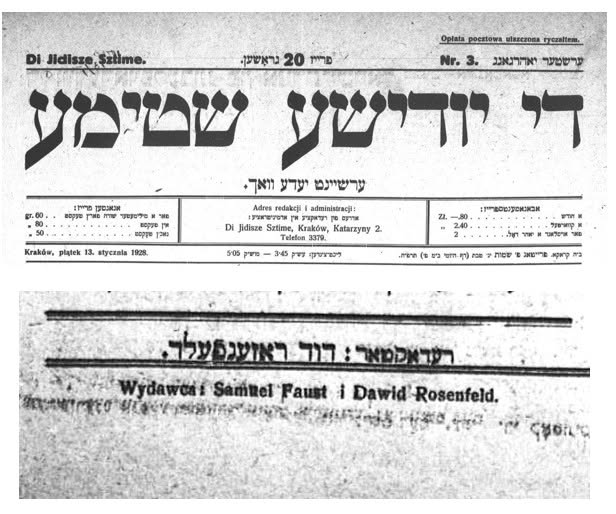
The newspaper “Di Yidishe Shtime” (The Jewish Voice) was published in Yiddish in Kraków in the 1920s and was dedicated to events concerning Jewish life in Kraków and Galicia. The editor of this newspaper was Brzesko-born Samuel Faust.
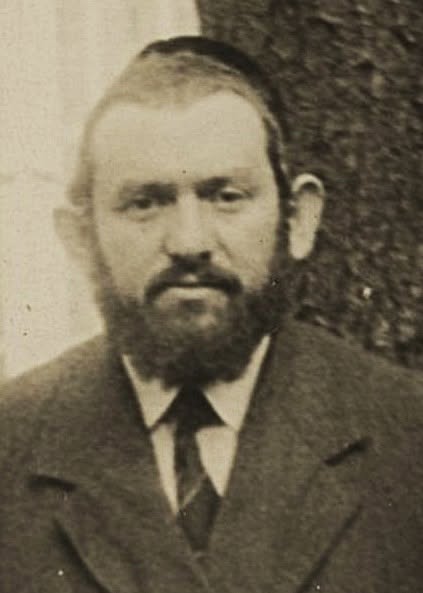
Samuel Faust was born in Brzesko on November 19, 1894. His father, Josef Faust (1842–1909), was a butcher, and his mother, Rachel née Weinberg (1860–1931), took care of the children. I do not know at what point Samuel moved to Kraków, but by 1928 he was already the editor of the weekly newspaper “Di Yidishe Shtime.” During this period, he also wrote articles for the newspaper. For example, on January 13, 1928, the newspaper published his interview with the Rabbi of Bobov, Ben Zion Halberstam. The Rabbi shared about the Lwów rabbinical congress, Piłsudski’s decree, and the upcoming Sejm elections.
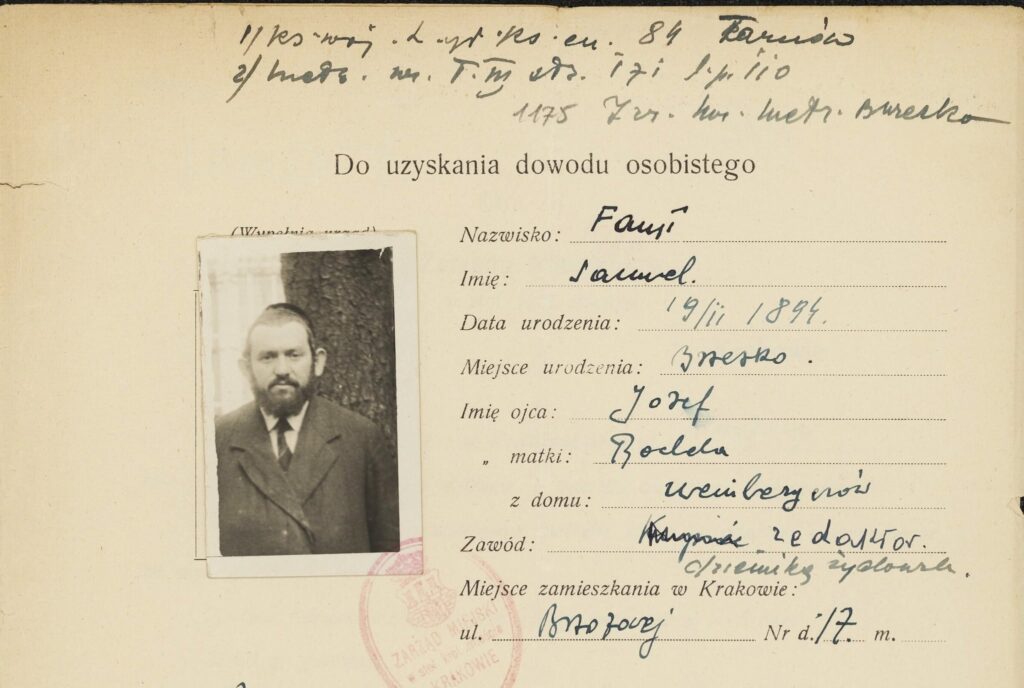
Although this newspaper was only published for a few years, as late as 1937, Samuel wrote “editor of a Jewish daily newspaper” in the “profession” section of his ID card application. I also know that at least in the second half of the 1920s, Samuel Faust was still connected to Brzesko: he was on the board of the Brzesko Beit Yaakov school for religious girls, and in 1928, he became a member of the newly founded Zionist organization “Mizrachi” in Brzesko (but I will talk more about this organization later).
Samuel Faust married Sara Teller, who came from Rzepiennik; the couple had two children: a daughter, Elli (1931), and a son, Josef (1938). In 1939, the whole family ended up in Lwów – they most likely fled east in the autumn of 1939. When these areas were occupied by the Soviet Union, the Fausts were deported deep into Russia, thanks to which they survived the war.
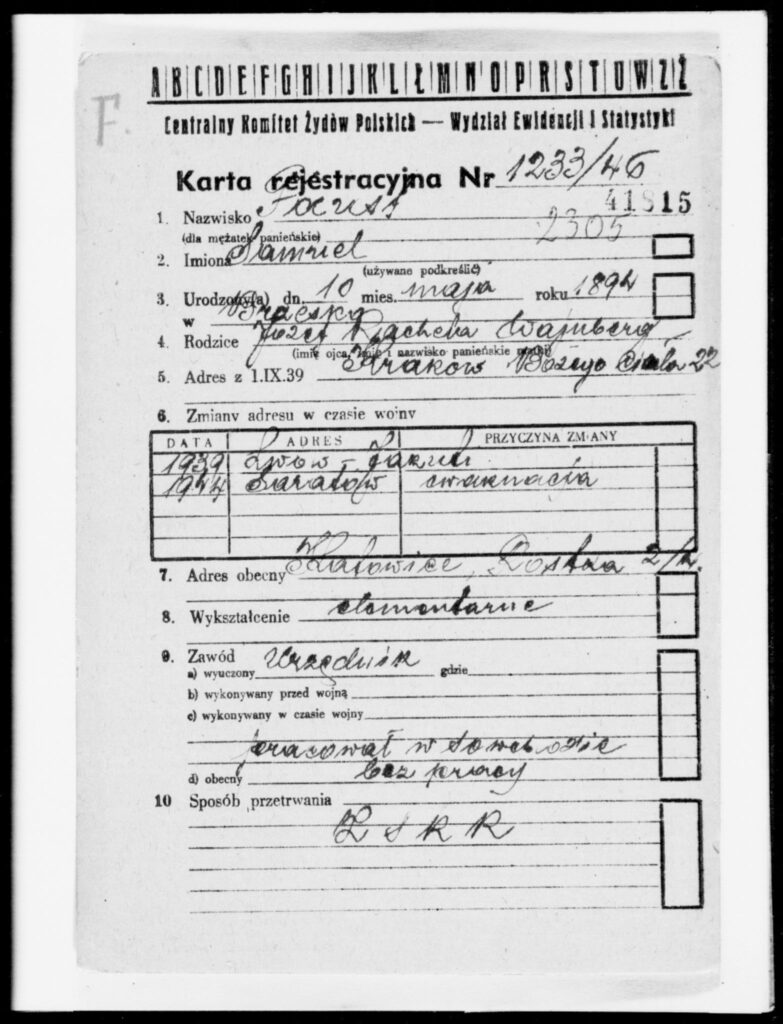
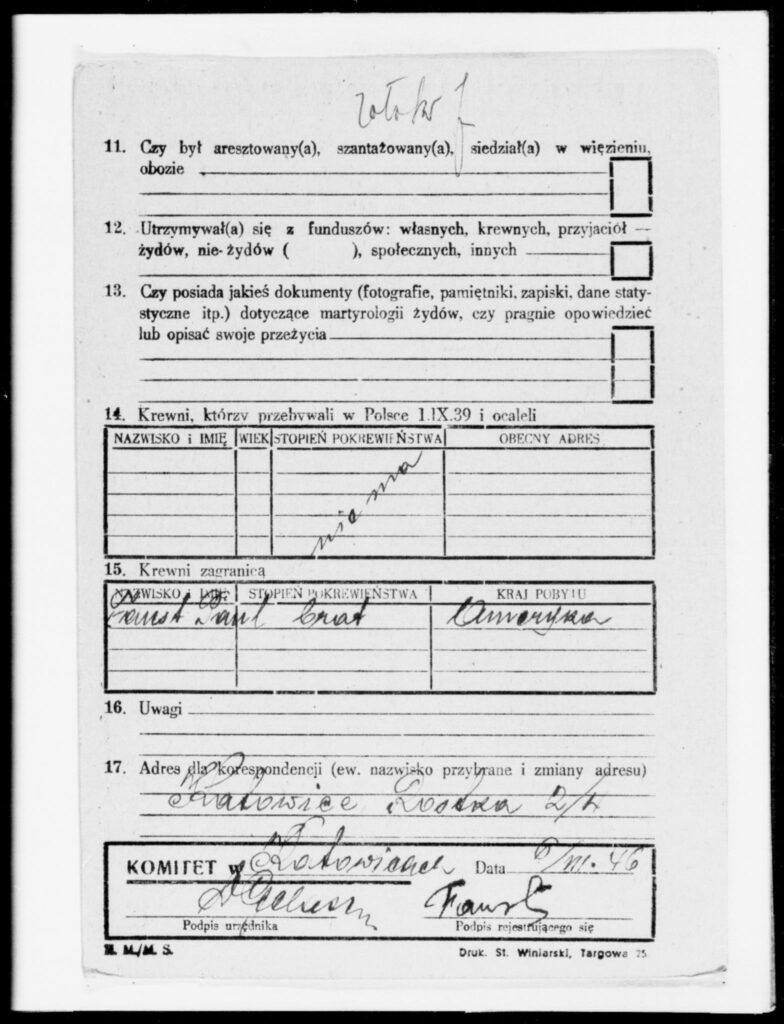
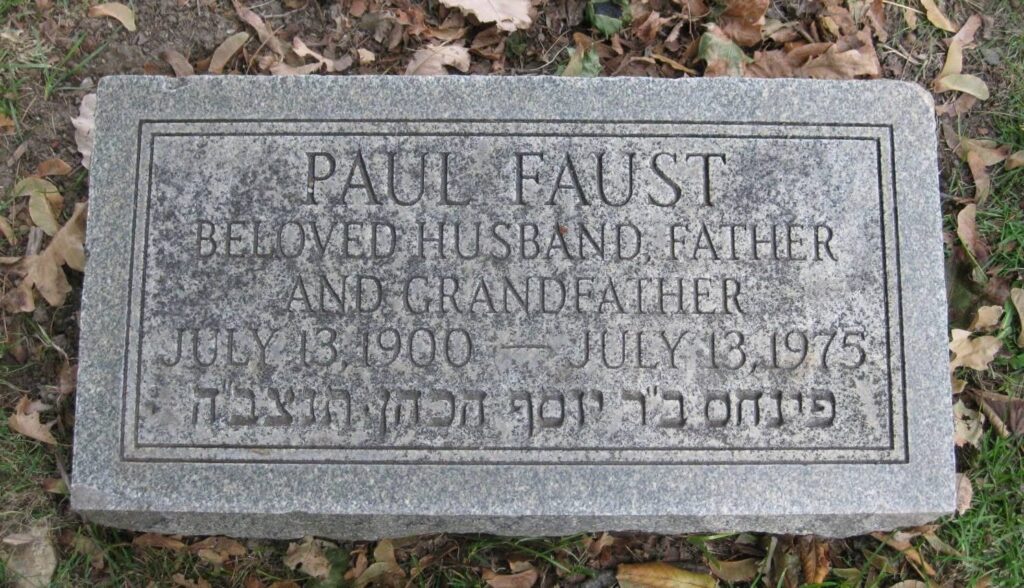
After the end of the war, they returned to Poland – in 1946, they were all registered in Katowice. Unfortunately, no one from the family who remained in Poland survived. Samuel’s younger brother, Jakob Faust, a member of the Brzesko Town Council in the 1930s, who also fled east with his family in 1939, perished in the Soviet Union along with his wife, Perła Feibysowicz, and their sons, Salomon and Saul. Only Samuel’s brother Pinkas, who emigrated to the USA in 1921 and adopted the name Paul (1900, Brzesko – 1975, USA), and a few distant relatives survived.
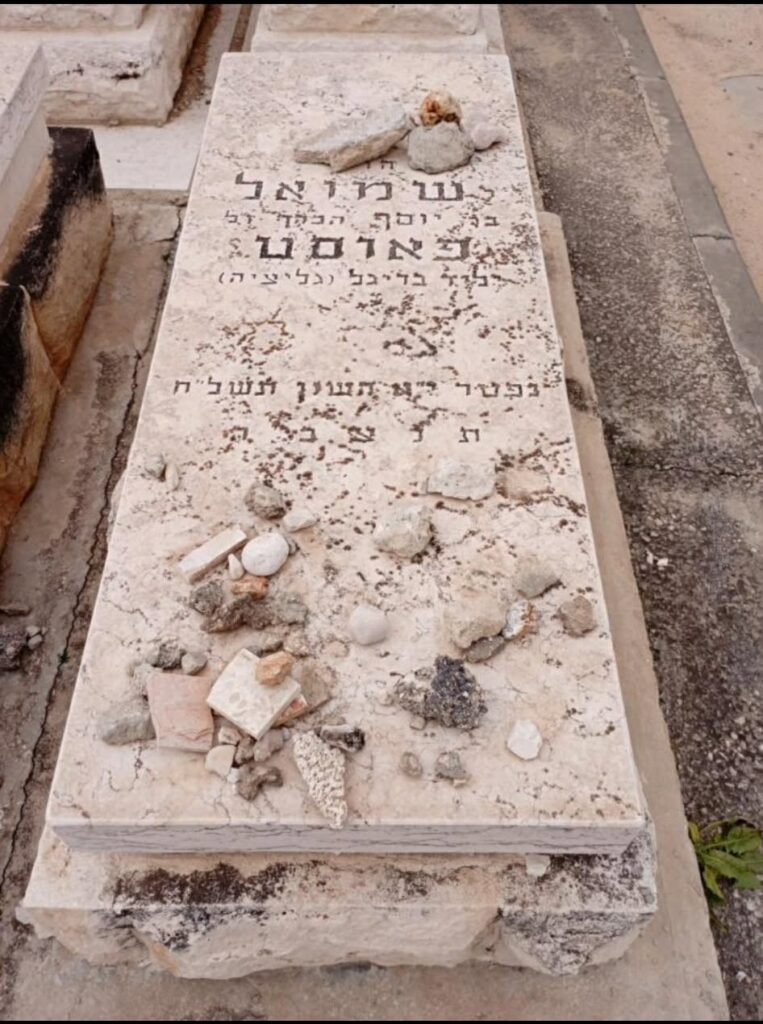
Samuel Faust emigrated with his wife and children to Israel. He passed away in Petah Tikva on October 23, 1977. His wife, Sara, died 3 years earlier; they are buried next to each other.
In the very same issue of the newspaper “Di Yidishe Shtime” (The Jewish Voice) from January 13, 1928, one can find several news items from Brzesko submitted by Abraham Briegel.
Perhaps at the beginning, I will say a few words about the author.
Abraham Briegel, son of Feiwel and Ester née Schiffer, was born in Brzesko on December 15, 1903. Between 1910 and 1917, he attended the elementary school on Głowackiego Street together with his brother and 5 sisters. Unfortunately, I do not know what happened to him during the war years.
Among other things, Abraham Briegel submitted to the newspaper a short note regarding an event that took place in Brzesko a few days earlier – on Saturday, January 7:
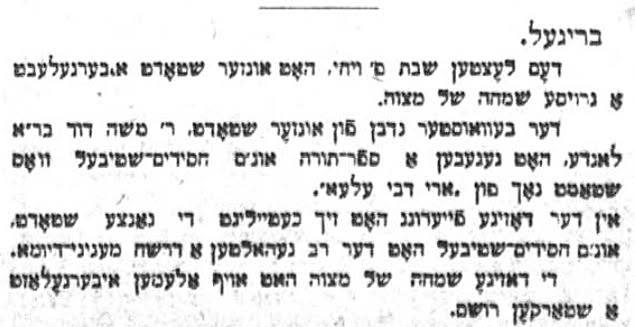
“Last
Saturday… our town experienced great joy.
A well-known donor from our town, Mr. Moshe Dawid B-r-i-a [abbreviation for:
son of Reb Yitzhak Eisig] Landau, donated a Torah scroll to the Hasidic house
of prayer, which bears the name ‘Ari dwei Ilai.’
The entire town took part in this celebration….”
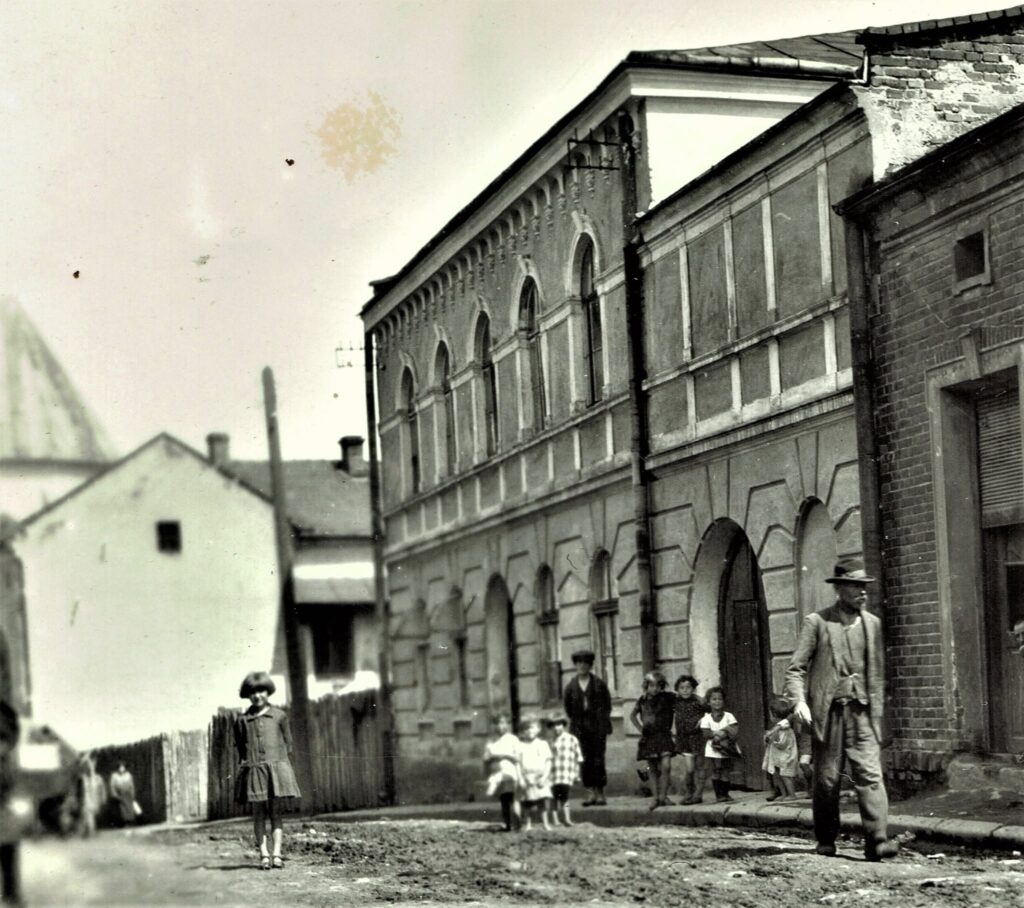
“Ari dwei Ilai” is the title of the most important work by the Rabbi of Brzesko, the Tzadik Arie Leibush Lipschitz, who died in 1846 and was buried in the ohel at the Brzesko Jewish cemetery. On the day, when the new Torah scroll was donated to the synagogue on Berka Joselewicza Street, a sermon for the occasion was delivered by the Tzadik’s great-great-great-grandson, Rabbi Moshe Lipschitz.
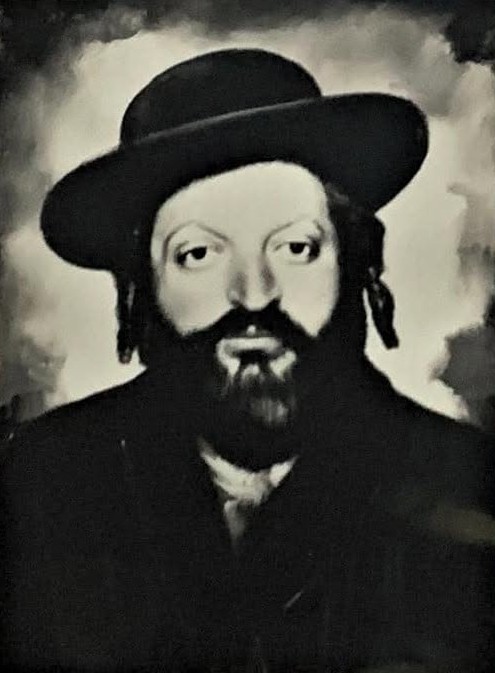
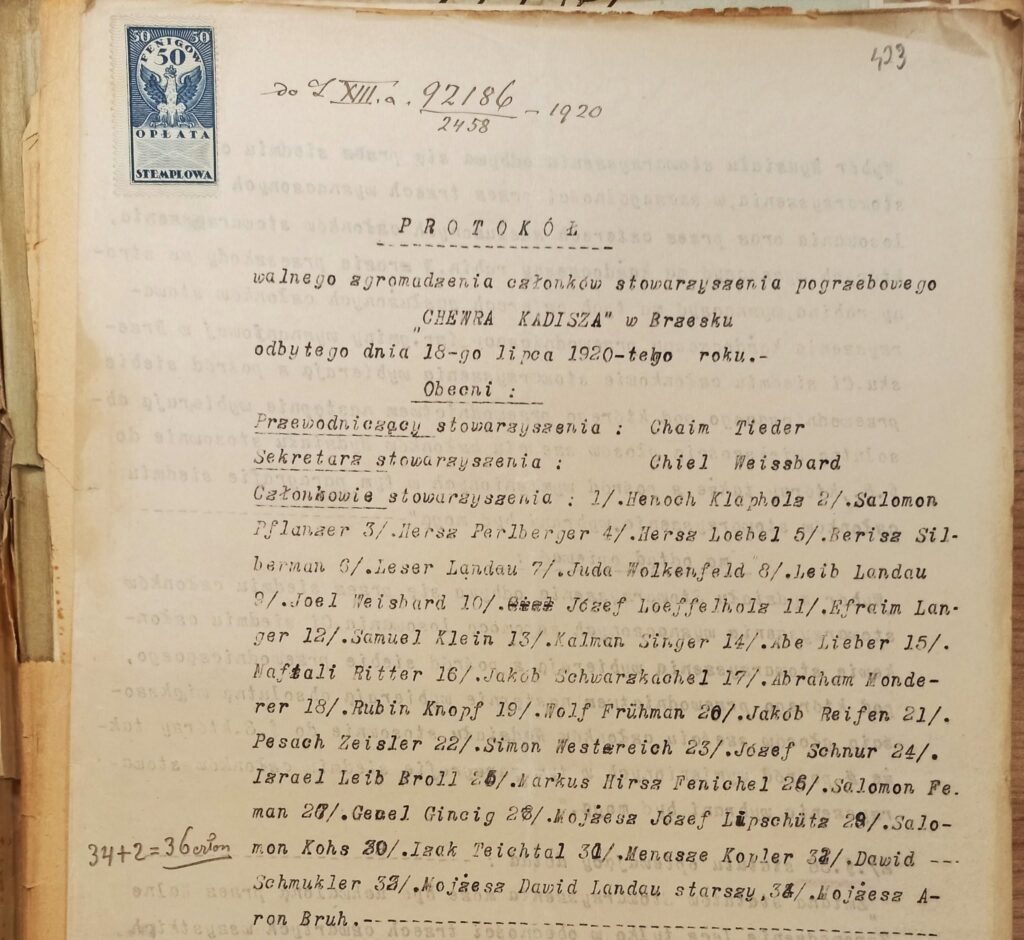
Moshe Dawid Landau, who donated the Torah scroll, was born in Brzesko on February 12, 1866. He was the son of Eisig Landau and Ester Gittel née Brandstatter, and the nephew of the writer Mordechai Dawid Brandstatter. He became a merchant, running a general store, and was a member of the Chevra Kadisha burial society.
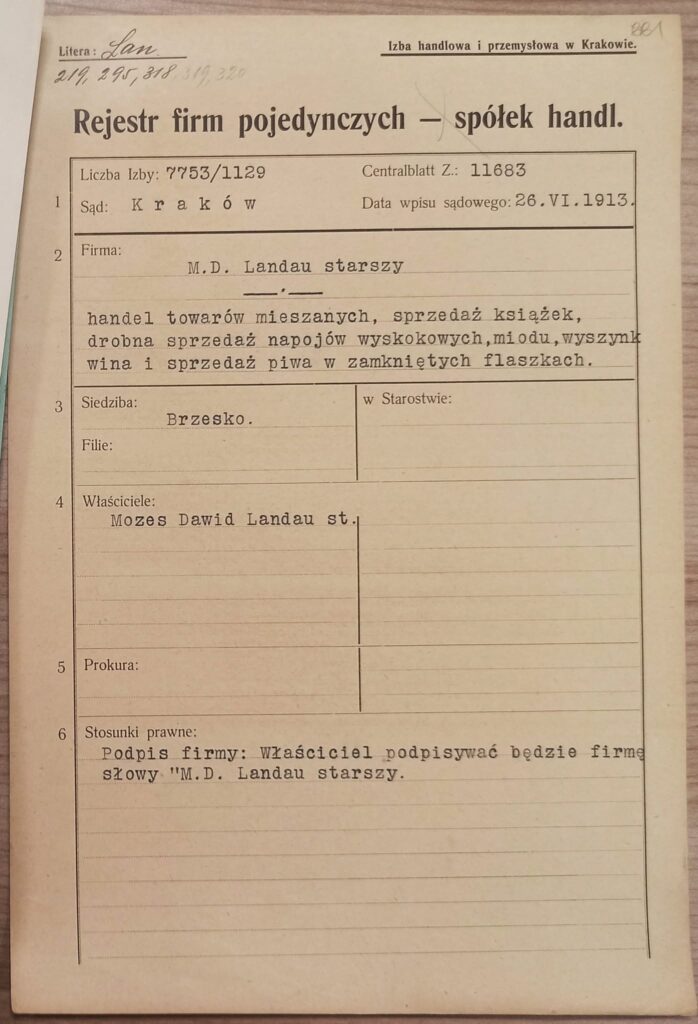
Moshe Dawid Landau married Sara Reiter, who came from Dąbrowa, but unfortunately, the couple had no children. Perhaps that is why it was so important to him that his memory would live on in the Hasidic house of prayer?
Writing a Torah scroll takes many months; it must not contain a single error. This is why donating a new Torah scroll is such a major event for the entire Jewish community.
Moshe Dawid Landau died in Brzesko on November 15, 1939; his gravestone can still be seen at the cemetery.
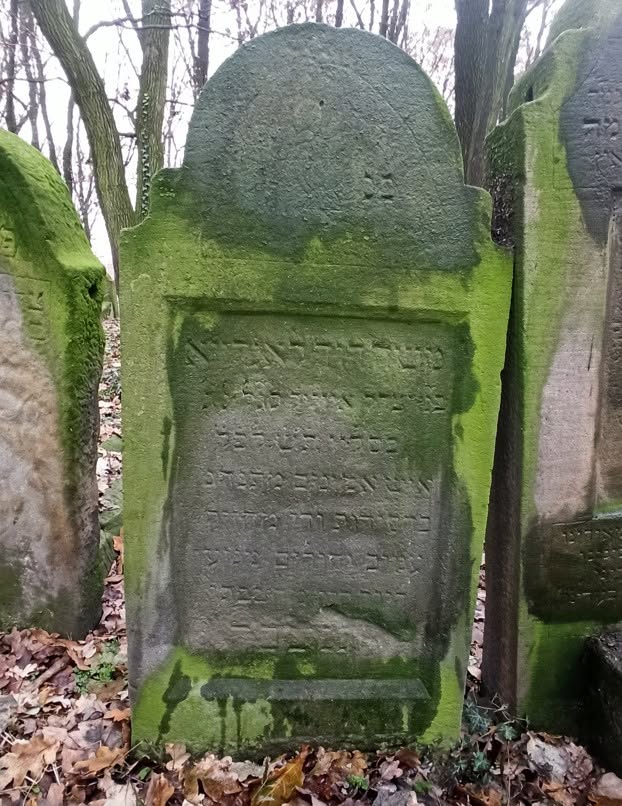
An honest man,
guided by
Justice and being a pillar
For the poor and the sick…
There are also the matzevot of his mother, Ester Gitel Landau née Brandstatter (1831–1910), his grandfather, Chaskel Brandstatter (1808–1888), and his grandmother, Rifka Landau (1798–1883), who was also the great-great-grandmother of the survivor Dov Landau.
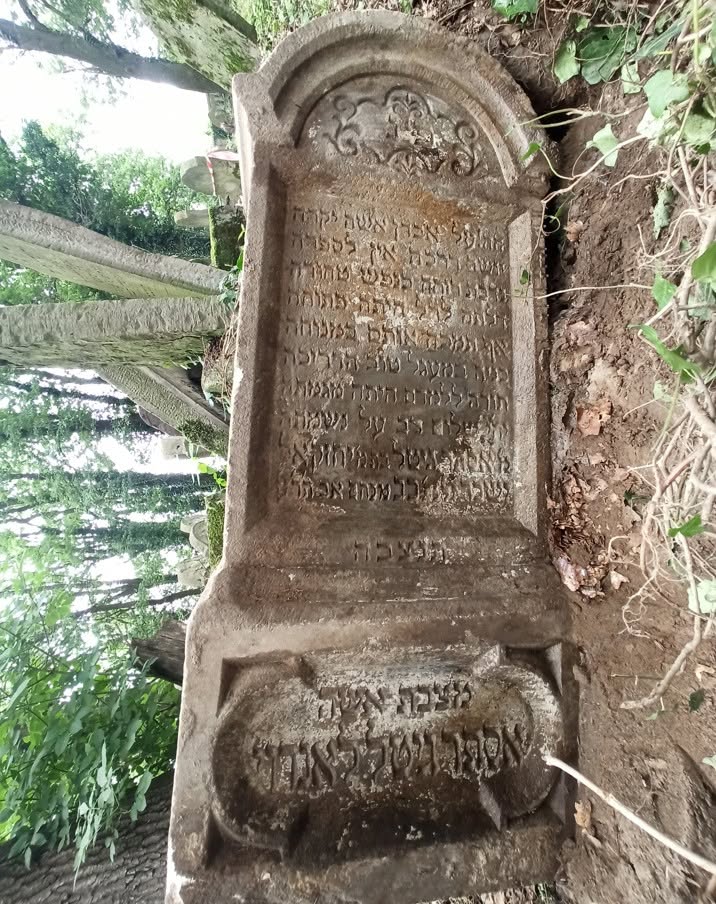
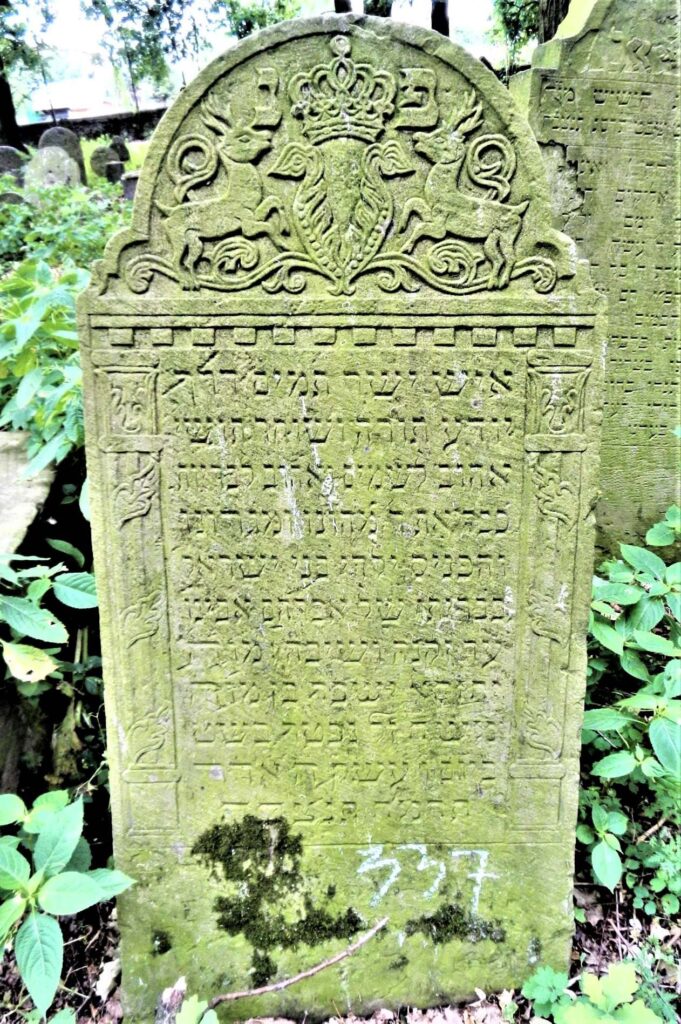
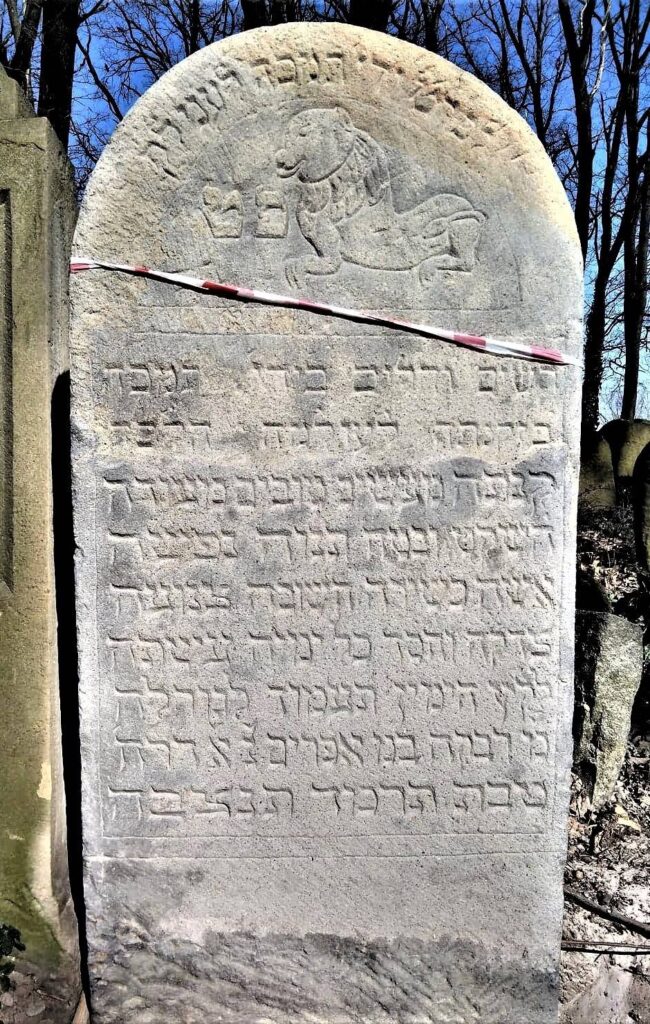
There is no longer any trace of the Hasidic house of prayer. I do not know what happened to the Torah scroll. Only the matzevot still stand in the Brzesko cemetery.
Among the news from Brzesko published in the newspaper “Di Yidishe Shtime,” there was also this note:
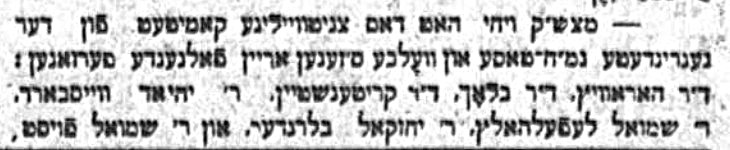
“The central committee of the newly founded ‘Mizrachi’ [organization] accepted the following members:
Mr. Horowic, Mr. Bloch, Mr. Krytensztejn, Mr. Jechiel Wejsbard, Mr. Szmuel Loffelholz, Mr. Jechezkel Blonder, and Mr. Shmuel Faust”
I have already written about Samuel Faust, and now I would like to say a few words about the Mizrachi organization and the other newly admitted members.
Mizrachi was a religious, Orthodox Zionist party and organization founded in 1902 in Vilnius, which became one of the most important Jewish political forces in Poland during the interwar period. This movement combined traditional Judaism with modern Zionism, proclaiming that the return of Jews to the Land of Israel and the rebuilding of their own state there was a religious duty, and that the future state should be based on the laws of the Torah and Jewish tradition.
The individuals mentioned in this short note were not only activists of the Mizrachi organization but also active members of the Brzesko community – six out of the seven mentioned individuals belonged to the Brzesko Town Council before the war.
Samuel Loffelholz and lawyers Izrael Krittenstein, Edmund Horowitz, and Henryk Bloch were members of the Brzesko town council in 1927. I do not know what happened to Izrael Krittenstein; Loffelholz, Horowitz, and Bloch were murdered in the Holocaust.
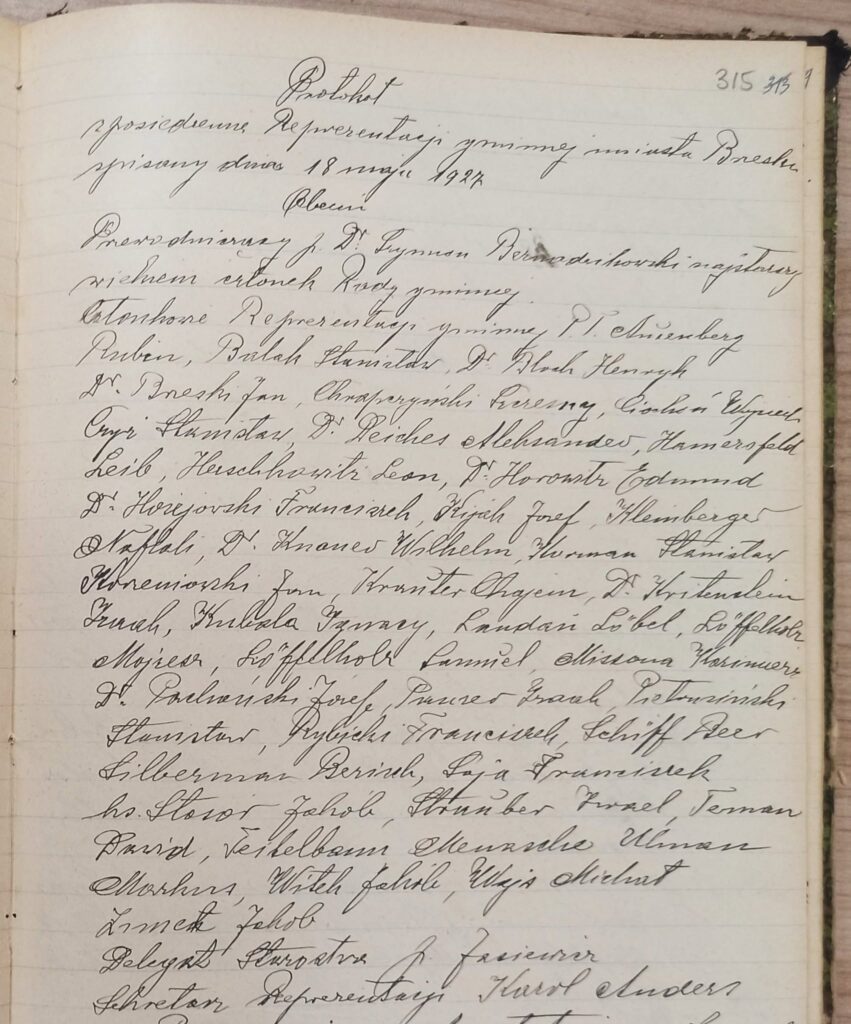
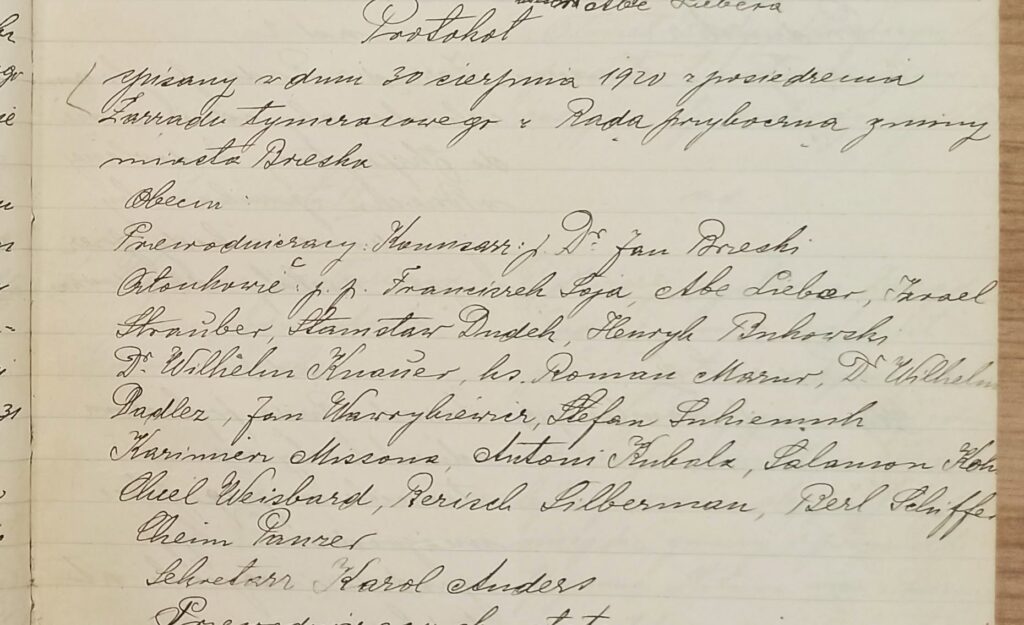
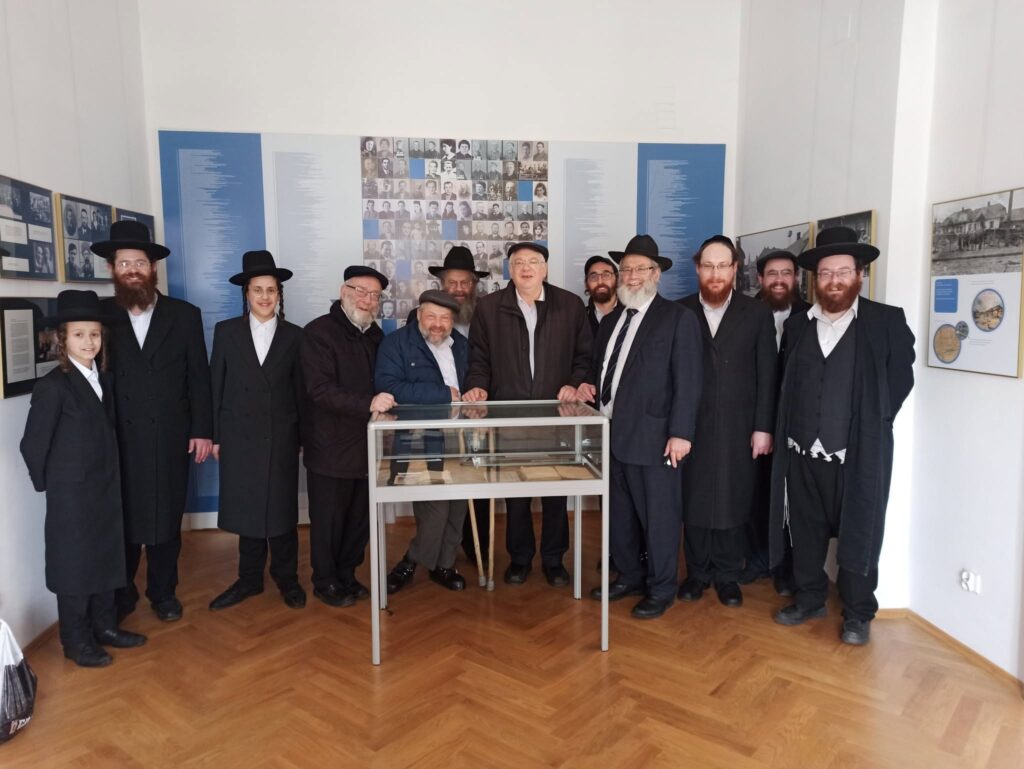
Jechiel Weisbard (1857–1940) joined the Town Council earlier, back in 1920. A few years ago, his descendants – a family of 12! – visited Brzesko to see the town of their ancestors and pray at the graves of several generations of Weisbards at the Jewish cemetery.
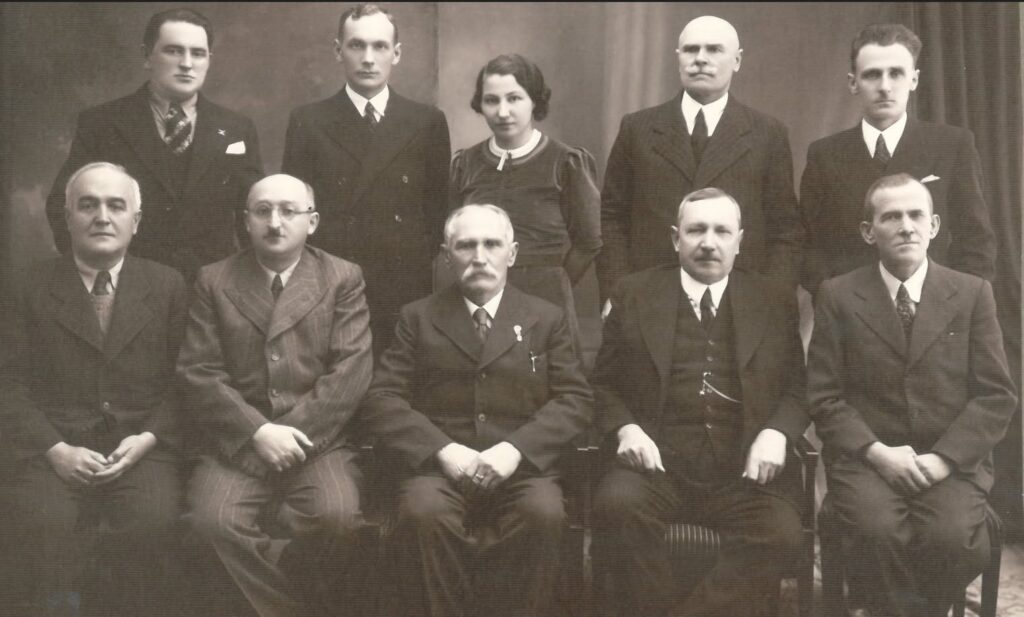
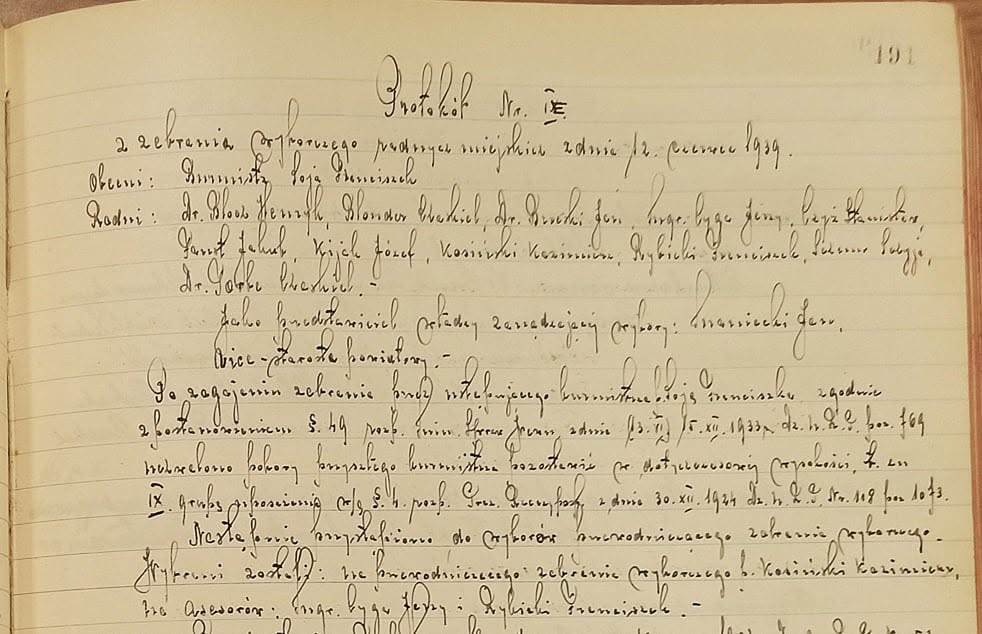
Chaskel Blonder (1887–1943), the youngest of the individuals mentioned, belonged to the last pre-war Brzesko Town Council; together with Henryk Bloch, he participated in the Council meeting on June 12, 1939. According to the testimony of his surviving son, Josef, he was executed by firing squad on September 1, 1943.
Thanks to a single issue of the newspaper “Di Yidishe Shtime,” nein Brzesko Jews have been brought back from oblivion.
© Anna Brzyska, 2026