
Efroim Jakob Beidner was born in Brzesko on January 28, 1867. He became a “private Hebrew teacher” (as his occupation was described in his children’s birth records). The Beidners had lived in Brzesko for many generations; the gravestones of Efroim Jakob’s father, Josef Beidner (1844-1889), and his grandmother, Keila Beidner (1809-1878), can still be seen in the Jewish cemetery in Brzesko.
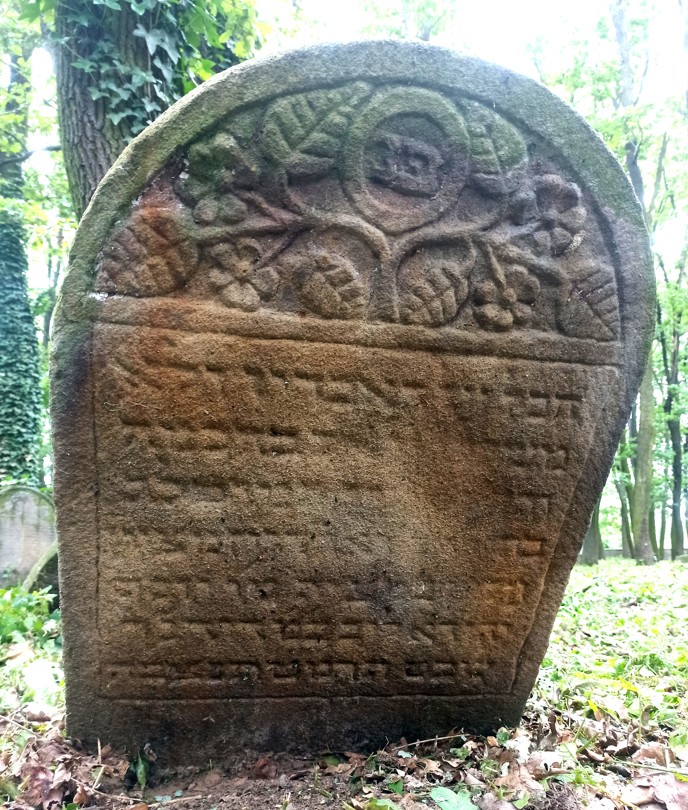
Here is buried
Weep for them, lost, but not
Forgotten….
……….. wonderful
….
…. Our teacher, Yosef
Yehuda Leib, son of Mr David. He passed away on 20 of
Shvat (5)649 [January 21, 1889]. May his soul be bound in the bundle of life.
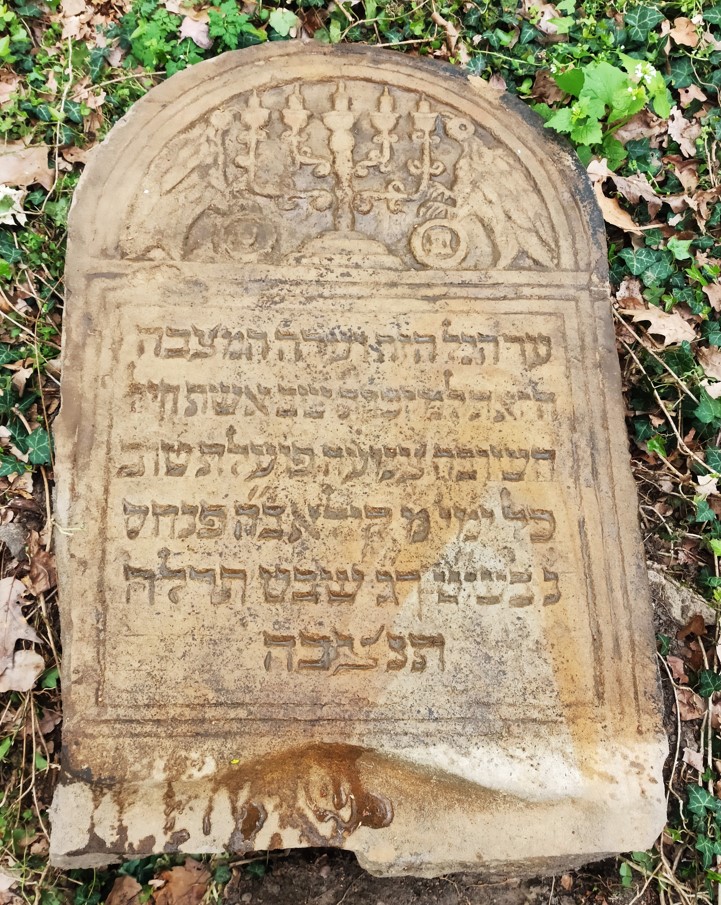
Here is buried
This mound is a witness and this tombstone is a witness (Gen. 31, 52)
To preserve the name of a woman of valour,
Respected, modest, doing good
All her days. Mrs Keila, daughter of Mr. Pinchas,
Passed away in good fame on 23 of Shevat (5)638 [January 27, 1878]
May her soul be bound in the bundle of life
Efroim Jakob Beidner married Niche Gittel Landau, whose ancestors had also lived in Brzesko since at least the late 18th century. Niche Gittel was born on March 22, 1878, she was the daughter of Feiwel Landau (1830-1890) and Scheindla Jochweta, née Goldstein. The gravestones of Feiwel Landau and his wife’s parents, Kopel Goldstein (1813-1892) and Chana Dwojra Goldstein (1829-1895), can also be found in the Brzesko Jewish cemetery.
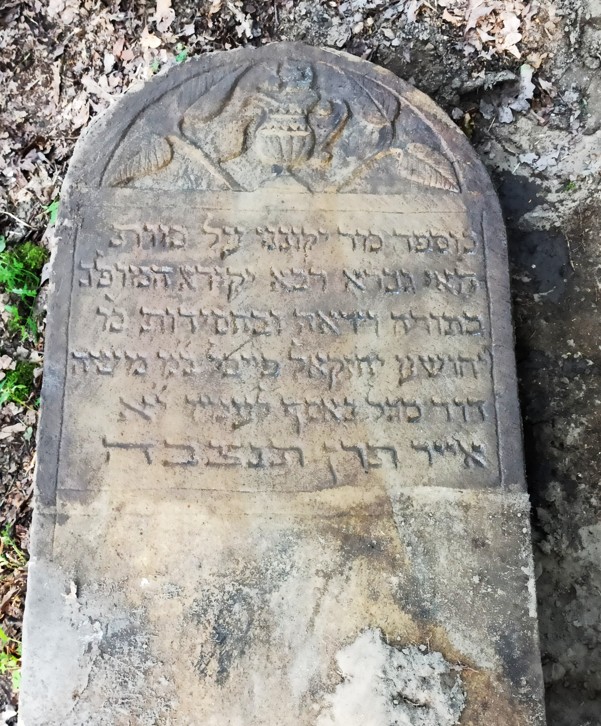
Photo 3. Matzevah of Feiwel Landau
Here is buried
Let us raise a bitter lament and weep over the death
Of a great and precious man, distinguished
In the Torah, piety, and justice, Mr
Yehoshua Yecheskiel Feiwel, son of Mr Moshe
David the Levite. He was taken to his people (died) on 11 of Iyar (5) 650 [April 30, 1890]. May his soul be bound in the bundle of life.
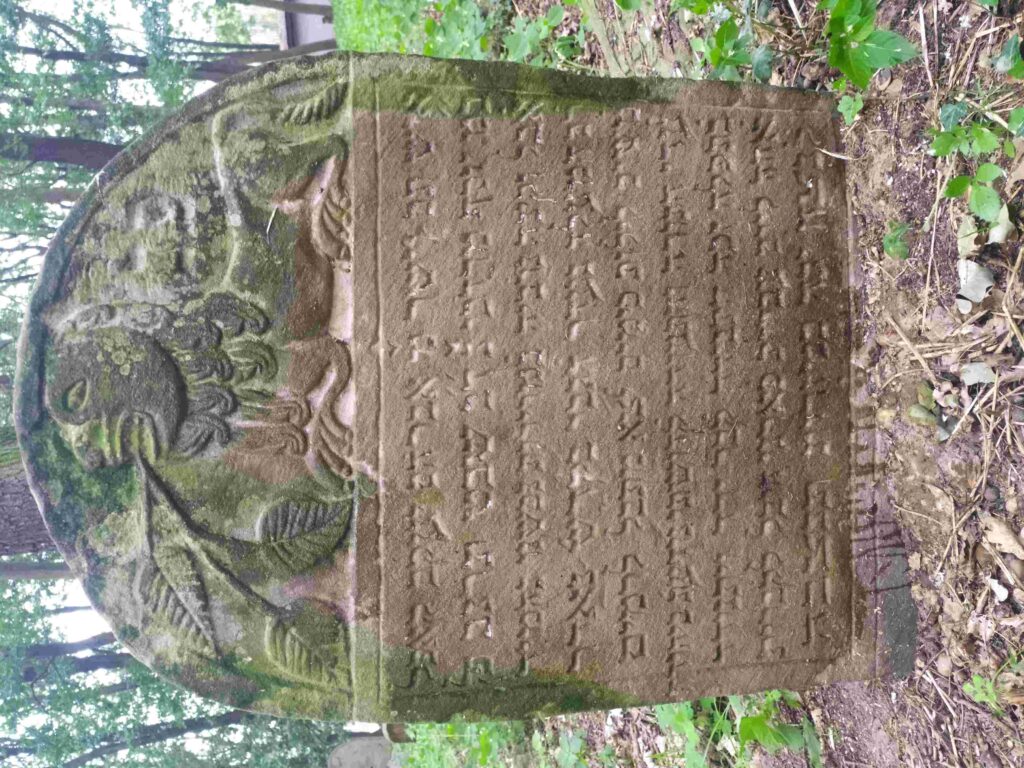
Here lies
A good and righteous man, Abraham Jakob Kopel
Son of Mr. Josef Mordechai, died on 22 of Shevat (5)652 [February 20, 1892]
Let there be mourning and lamentation, our souls sigh in bitterness.
A great eminence has been lost, a man great in holiness
He studied the Torah at night as in the day (Moed Katan 25b, 3) and left the earth for the heavens
The jewel of the Torah and the testimony of its holiness known in Judah
In prayer he achieved [spiritual]isolation He went down to the grave and was lulled
Oh woe! On the day of wrath, when our pride was taken to the grave
It will shine among the stars forever. May his soul be bound in the bundle of life.
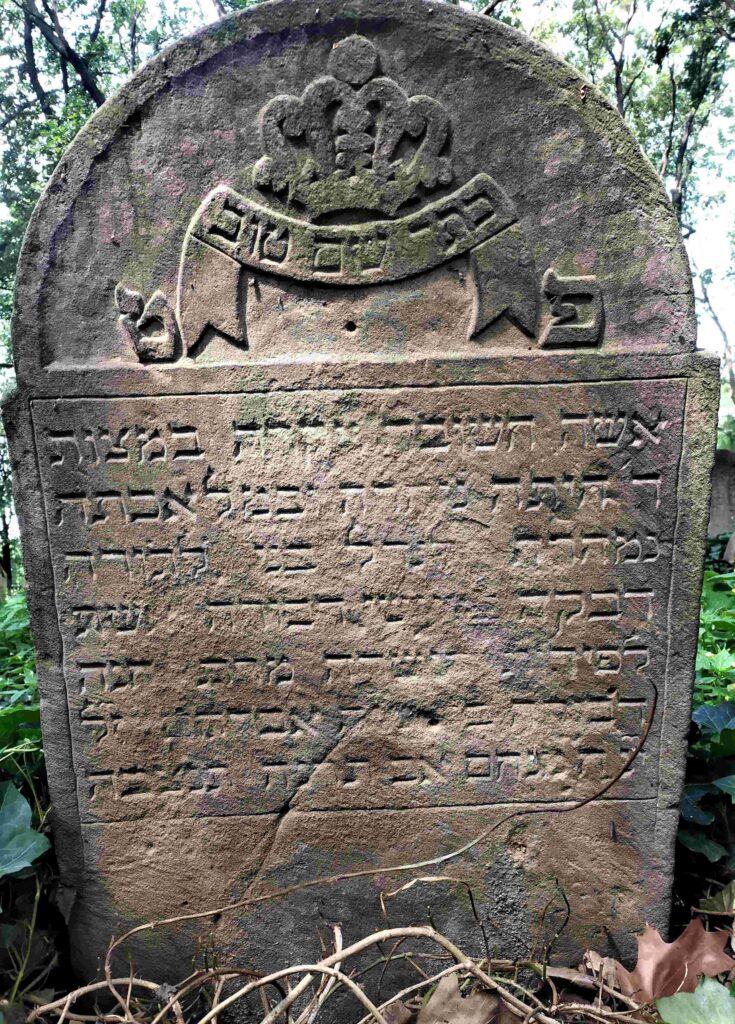
Crown of good name
Here lies
A respected and dear woman. She was diligent
In fulfilling the commandments of the Lord and agile
In her work. She raised her sons to the Torah
As Deborah, wife of
Lapidoth was righteous in her deeds. Mrs Chana
Dvora, daughter of our teacher Mr Avraham of blessed memory
Died on 8 menachem Av (5)655 [July 29, 1895]. May her soul be bound in the
bundle of life
Deciphering and translation of all 5 inscriptions by Jolanta Kruszniewska
The spouses Efroim Jakob Beidner and Niche Gittel nee Landau had 10 children, two of whom died in infancy. Only daughters attended elementary school in Brzesko: the father, being very religious, believed that his sons should not go to public school. The boys studied in a cheder and with a private tutor at home (during these classes they also learned Polish), and later continued their education in a yeshiva in Kraków.
Efroim Jakob Beidner died of pneumonia in 1938. His wife Niche Gittel was murdered in Auschwitz in September 1943.
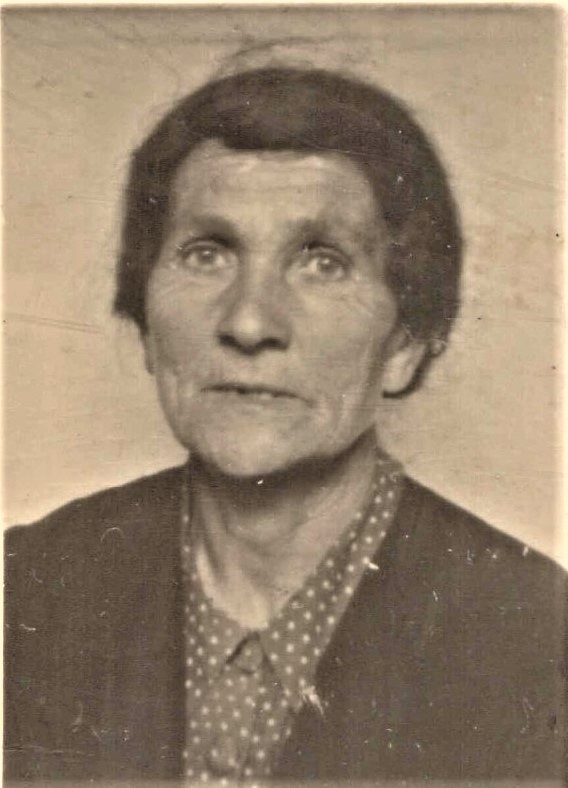
And here is what happened to the children of this couple:
Scheindel Jochwet (1897), in 1924 she gave birth to a daughter Ryfka Hena, who attended primary school in Brzesko until 1934; later the family moved to Kraków. Both mother and daughter were murdered.
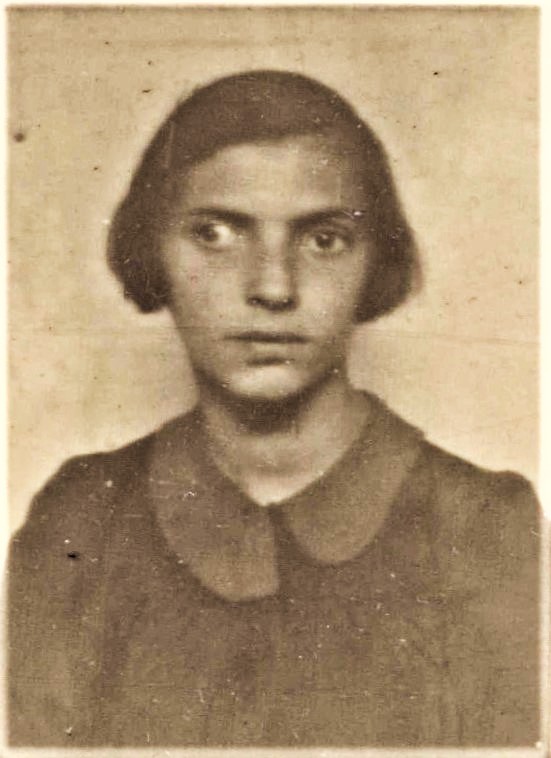
Keile Hudes (1900), attended Brzesko primary school in1906-1913; in 1926 married Dawid Geller from Myślenice, their son Moses Chaskel was born in Brzesko in 1930. All murdered.
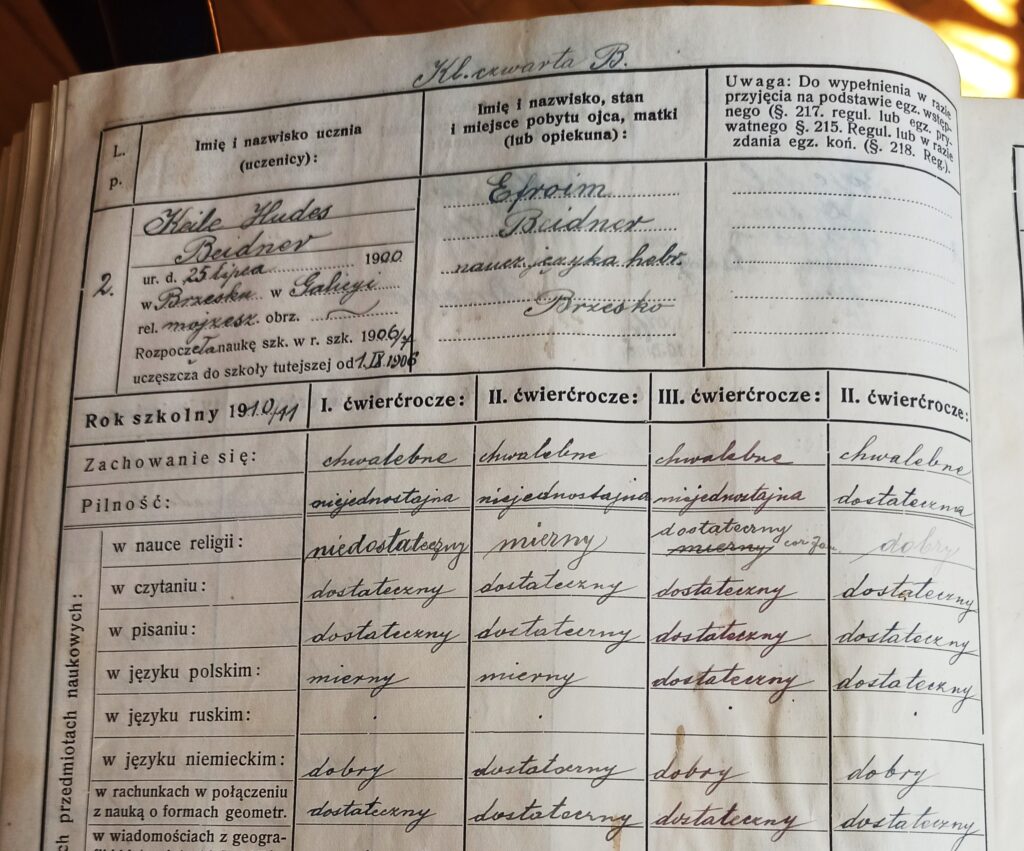
Chane Rachel (1903), attended Brzesko primary school in 1910-1916; in 1940 in Brzesko she married Matias Beidner from Niepołomice. Murdered.
Josef Chaskel (1906), married Miriam Rosenfeld, lived in Krakow on Kalwaryjska street, during the war was in Brzesko. Murdered in Bełżec
Dawid Chaim (1910), married Malka (Amalia) Stern from Wadowice, they had two daughters, Reizel (1938) and Hena (1939). During the war they were in the ghetto in Krakow, later in Bochnia. All murdered in Auschwitz.
Eidel (1913), died at the age of 1 year
Aron Pinkas (1917), married Sara Ryfka Weinberger from Dukla in Krakow in 1940; after a few months they left for Brzesko, where their son Efroim Jakob was born in 1941. Just before the liquidation of the Brzesko ghetto they escaped to Bochnia. Aron Pinkas – the only one from this large family – managed to survive the war. His wife and little son were murdered in Auschwitz. After the war, Aron Pinkas remarried, emigrated to the USA, that’s where his descendants still live.
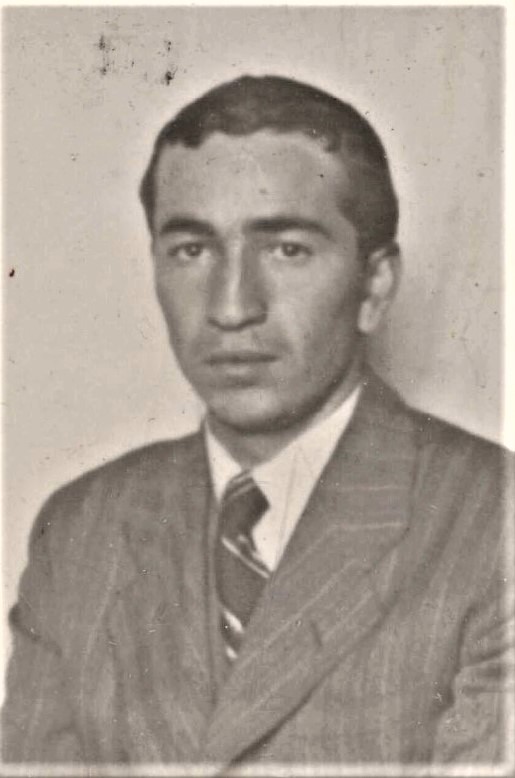
Dwojra Feigel (1919), attended Brzesko primary school in 1926-1929. Murdered.
Moses Abraham (1920), also moved from Brzesko to Krakow before the war. He was murdered in Auschwitz on July 18, 1942.
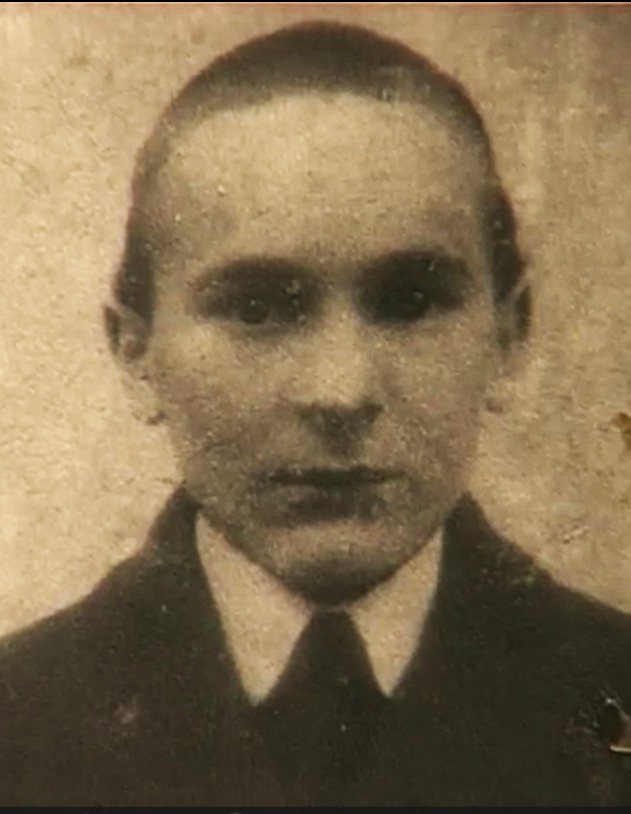
In 1995, there was recorded the testimony of the sole survivor of this family, Aron Pinkas Beidner, who emigrated to the USA after the war (November 12, 1995, USC Shoah Foundation). I would now like to give him the floor, quoting a few excerpts from this testimony:
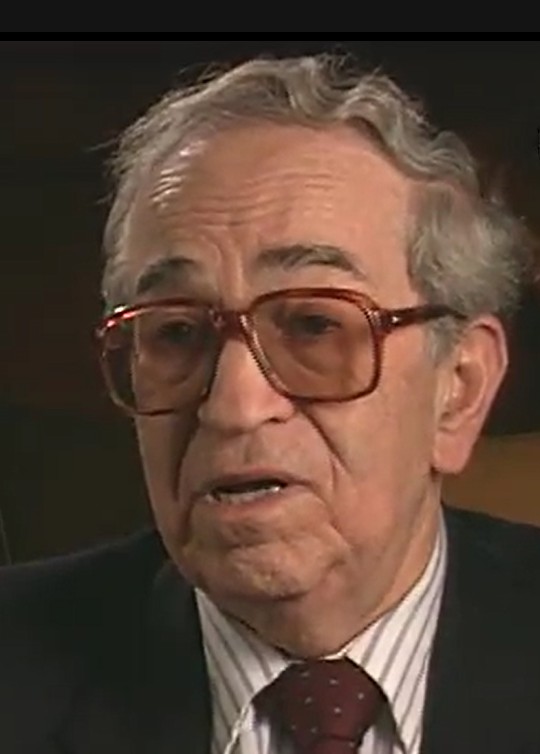
“I was born ito a very religious family. My father was a rabbi, Efraim Beidner, who taught in a yeshiva for advanced students. My mother was Gitel Landau. I had four sisters and three brothers. I attended cheder in Brzesko. My father didn’t send his sons to public school because Catholic prayers were held in schools in Poland, and wearing yarmulkes was forbidden. I was taught by a private teacher. Only my sisters attended elementary school in Brzesko. After my bar mitzvah, I was sent to study at the Kraków yeshiva. Later, the family moved to Kraków, and we lived there until the war. I learned a trade – I learned to bind books, and I married Sara Ryfka Weinberger…
In 1940, we went back to Brzesko, and in 1941, my wife gave birth to a child. Things were getting increasingly difficult, and the “Aktions” started. We had to wear armbands with the Star of David, and rumours circulated about the creation of a ghetto. The Germans issued an order that we had to work for the German army. We set up workshops – tailoring, shoemaking. It was my lucky day. I signed up as an apprentice to a shoemaker whom I had known from before the war. After a few weeks, I mastered the trade, and that saved my life…
A ghetto was established in Brzesko. My youngest brother, Mojsze, was very smart. He looked like a gentile, had blond hair, spoke Polish very well. He smuggled food into the Krakow ghetto, chickens, geese. He had had some connection to Polish police. He bribed them, and they helped him. Every few days, he would remove his armband and take the train to Krakow. I once went with him, even though I didn’t look like a Gentile, with my nose. I also had a backpack. We were at the gate of the Krakow ghetto when a German saw us and started running after us. We ran into the ghetto. The Polish police were at the gate. They quickly let us through because they knew Mojsze. We managed to escape. We sold things and went back home to Brzesko. This brother of mine supported the whole family. Unfortunately, other people knew that he knows Polish police, can get around, so they tried to gol with him. So one day, the Germans caught him when he arrived in Krakow with that group, surrounded the house where he was staying, and captured him. I never saw him again.
I had a cousin, Lezer Landau. He knew the police and and also some Germans.
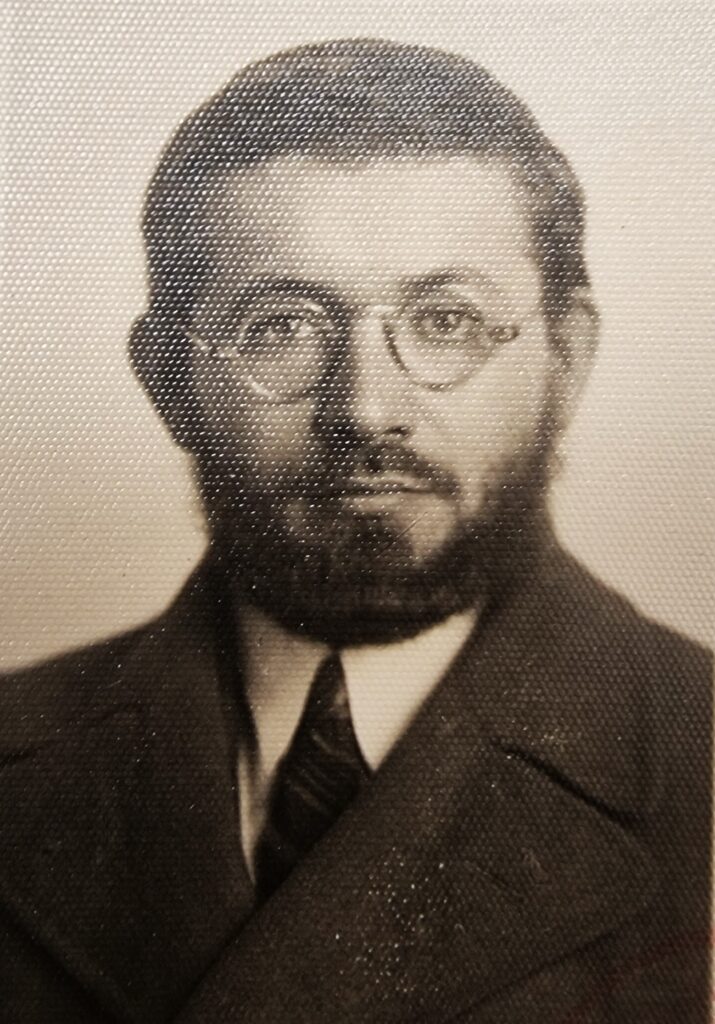
He tried to free Mojsze, but failed. He came and told us that Mojsze had been standing against a wall with his hands raised all night. The Germans said they will send him to Auschwitz. When Mojsze was still imprisoned in Krakow, he smuggled a letter asking those who remained to take care of mother. He was eventually sent to Auschwitz and murdered there.
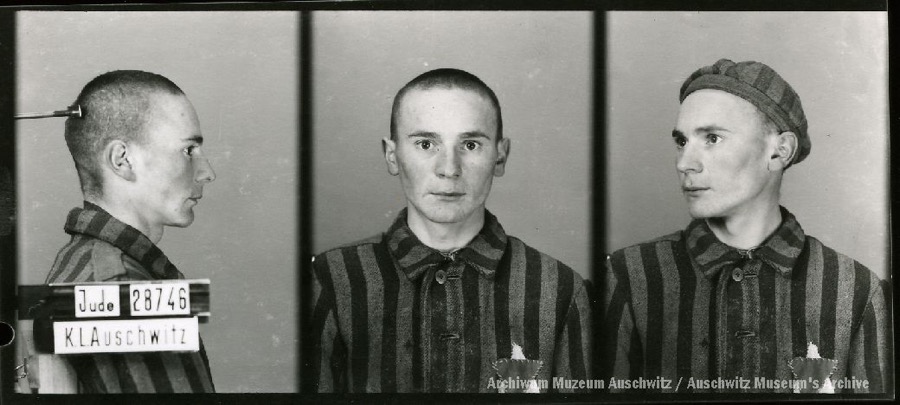
Things got very, very hard for us in the Brzesko ghetto. My oldest brother was taken away in one of the Actions. He ran away, they chased him, he was fighting back, and finally he and his wife were taken away. I had another brother and another sister in Krakow. In Brzesko, I was with my wife, child, mother, younger sister, and older sister. During the next Action, my older sister was taken away…
In 1942, rumours spread that the Germans wanted to make Brzesko “judenrein” (free of Jews). People tried to escape, but the ghetto was surrounded. My cousin, Lezer Landau, bribed Germans. He lived in Kraków, but was also active in Bochnia, near Brzesko. There were large workshops there working for the Germans. People hoped the Bochnia ghetto would survive. Finally, on the last day before Brzesko was to become “judenrein,” he sent us a document signed by a German allowing us to leave the town. We hired a Polish man with a horse-drawn wagon to take us to Bochnia – my mother, me, my wife, my child, and my younger sister, who was still alive at the time…
My sister, who lived in Kraków with her husband and two children, was killed along with her family during one of Actions. I had another brother still in Kraków, with wife and two children. They were already in the group scheduled for deportation, but then my cousin, thanks to his connections with the Germans, managed to rescue them and bring them to Bochnia. I worked in the Bochnia ghetto as a shoemaker and supported our entire family: my mother, my wife and child, my younger sister, and my brother, his wife, and their two children. We lived in Bochnia this way until 1943…
In September 1943, the Germans issued a new order: all Jews were to gather in the Market Square. A selection took place. Mothers were to surrender all children under the age of 14. My son wasn’t even two years old; he was crying, calling me, “Daddy, Daddy.” Finally, my mother took her grandchildren by the hand and went with them. I was pushed into a group of young people. My wife and my brother’s children were taken. My wife didn’t want to give up her child, so she went with him. It was Thursday morning. A group of elderly people, mothers with small children, everyone who couldn’t work, were put on trains. They were sent to Auschwitz…
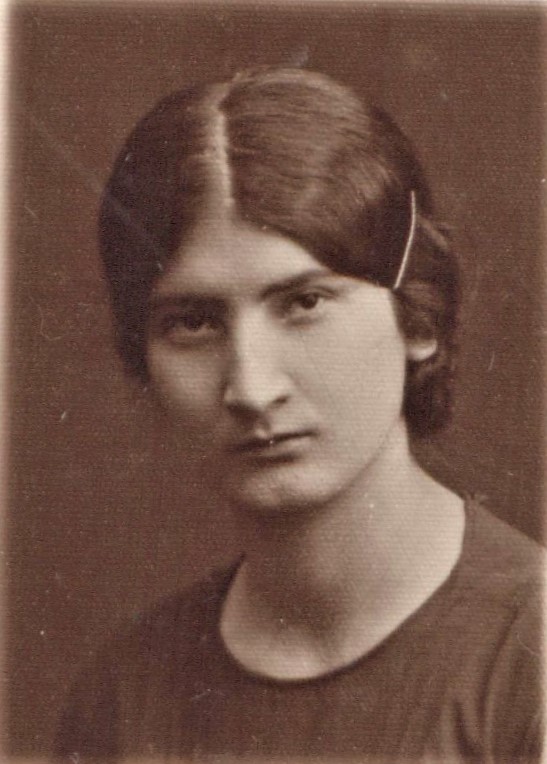
Friday morning only us young people were left, about 1000 people. We were put on cattle trains, were brought to Szebnia labour camp, next to Jasło… Of our entire family, only four of us remained: me, my brother (Dawid Chaim), my sister-in-law (Malka née Stern), and my sister (Dwojra Feigel). We were in this camp until November 1943. Then we were loaded onto cattle cars again and transported to Auschwitz.
Only I survived the selection. I was tattooed the number 160937 on my forearm…
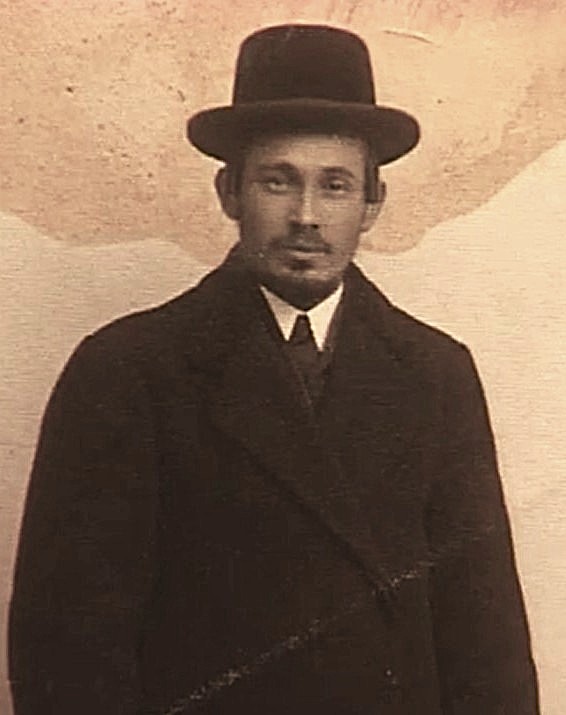
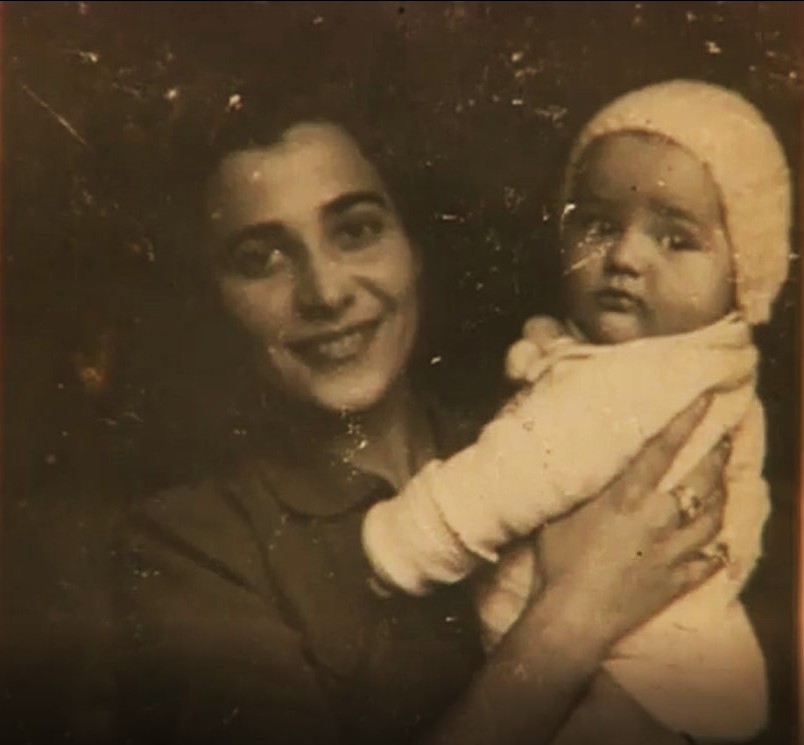
Russians were approaching, we once again were put on trains, travelled for 5 days and nights, no food or water. Every morning the bodies of dead were taken out. We passed by all eastern Europe, passed Leipzig, finally arrived in camp in southern Germany. British soldiers liberated us. I didn’t return to Poland – I knew that none of my family had survived…”
© Anna Brzyska, 2026