
Born in 1872, Wolf Munz was the eldest child of Berisch Munz and Reisel Nestelgrun, who had lived in Jadowniki. Wolf became a butcher and married Chana Hoffer. They had five children born in 1901-1911.
Wolf Munz didn’t live to see his children grow. According to the testimony of his half-brother, Izak Munz, Wolf was murdered in 1911 on his way from Jadowniki to Brzesko. Tragic death of Wolf Munz – “murdered in 1911” – is mentioned in the “Cadastre of Craftsmen from Brzesko and vicinity”.
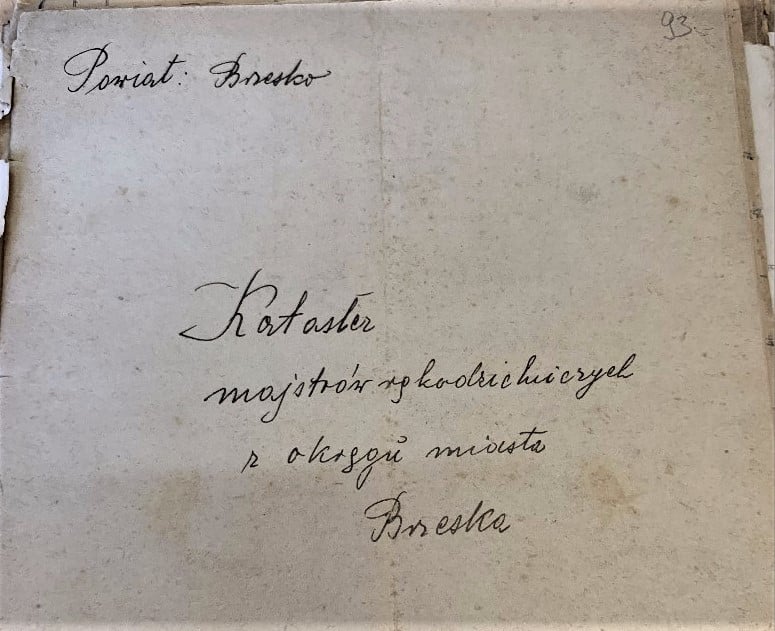
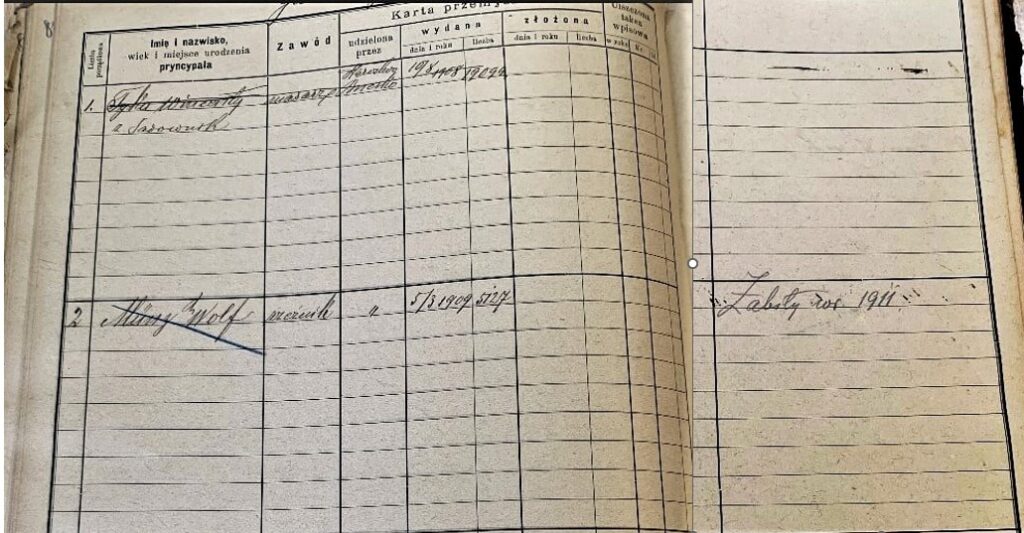
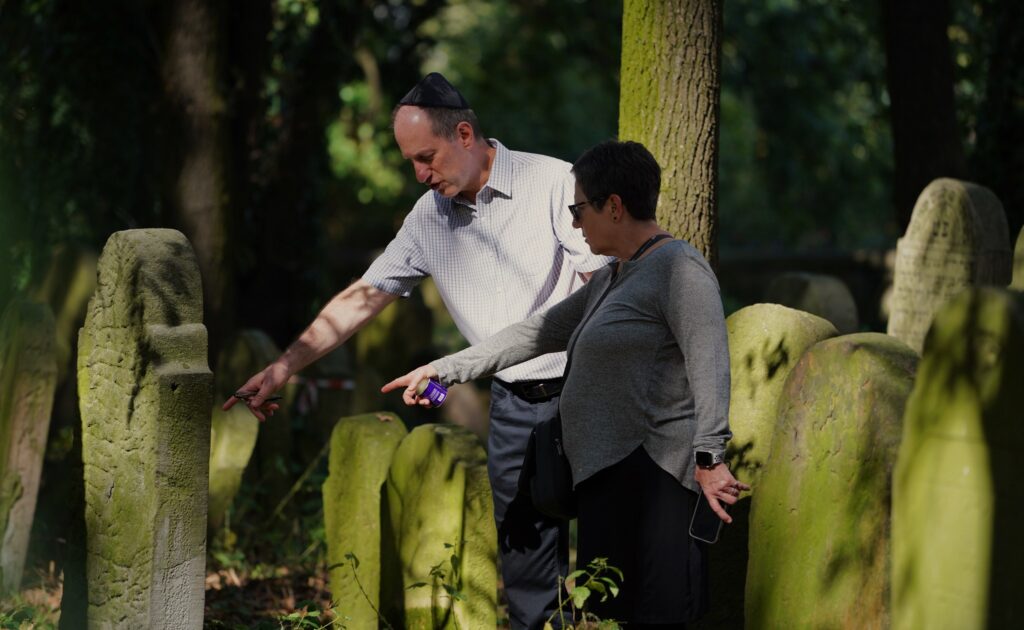
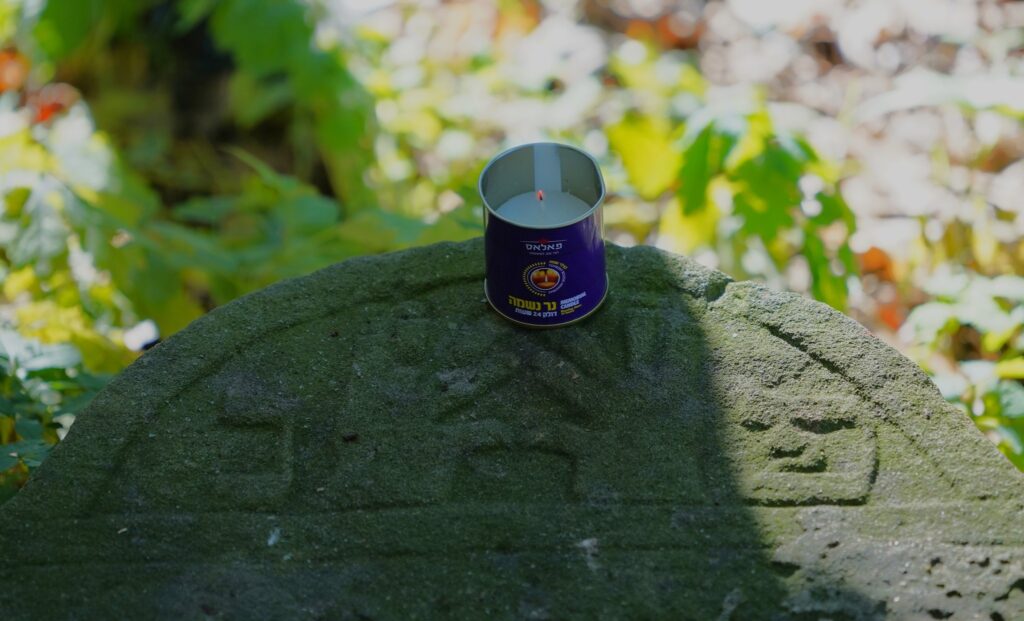
It is hard to imagine the tragedy of his widow, who was left alone with five children, Reisel (1901), Sara Rifka (Sala, 1904), Rojza (1906), Lewi Isaak (Leon, 1909) and Dwojre who was only several months old (Dora, 1911). We do not have any photos of Wolf, his wife and children, but his matzeva still stands in the Brzesko cemetery. Last September his relative Rich Minz lit a candle on his grave.
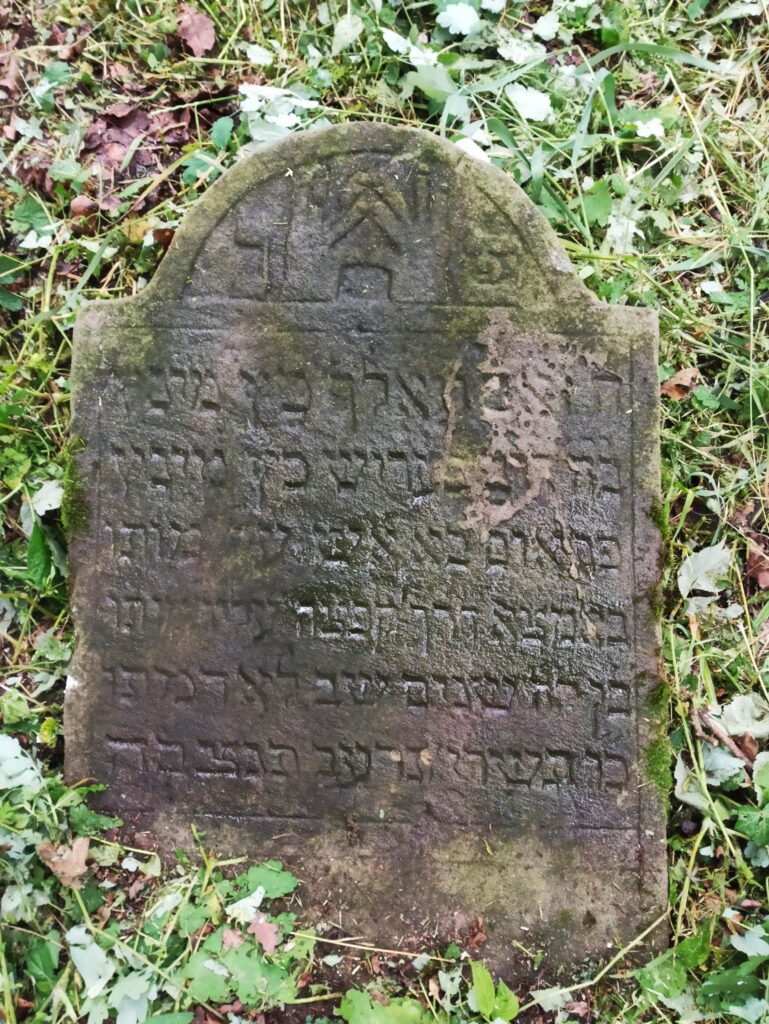
Zeev Volf Munz, son of Dov Berisch Hakohen, 35 years old, died on October 18, 1911
Deciphering the Hebrew inscription and its translation by Jolanta Kruszniewska.
Chana never remarried, raised her children alone. School records of Leon, Reisel and Sala have survived in the archives of the Brzesko elementary school #1. The other children could have also attended Brzesko primary school or studied in Jadowniki.
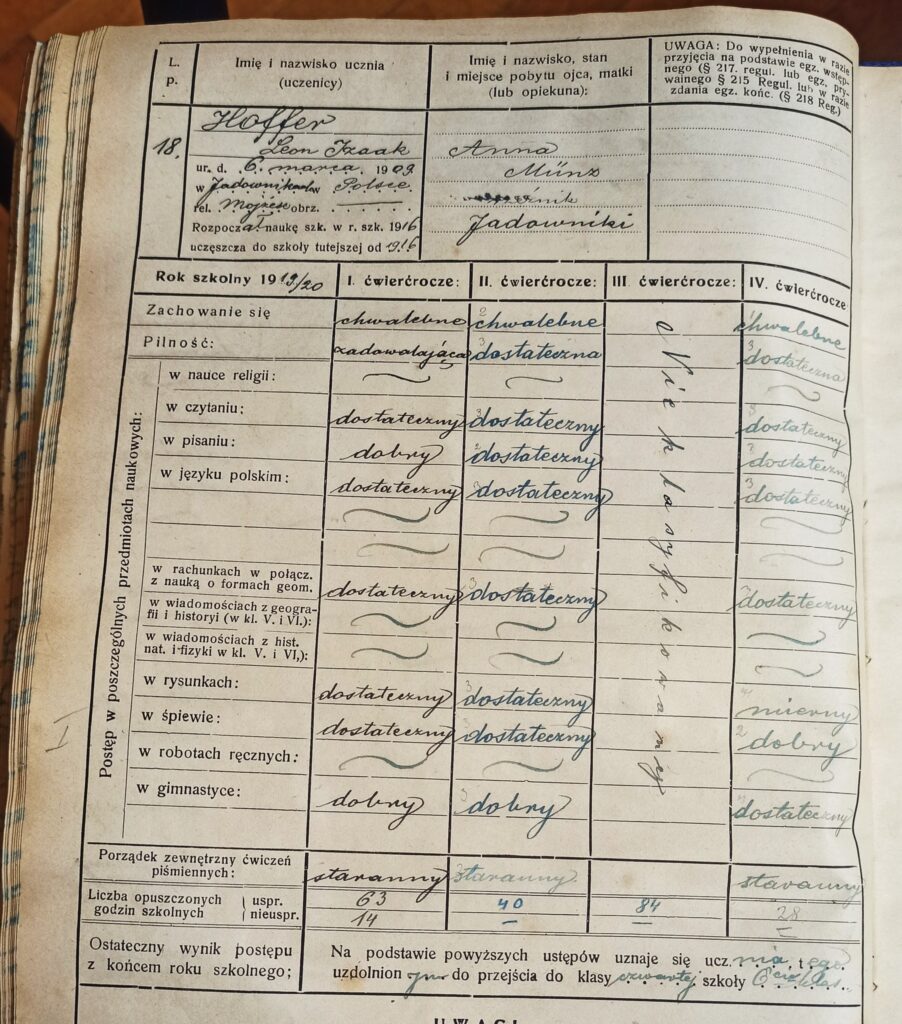
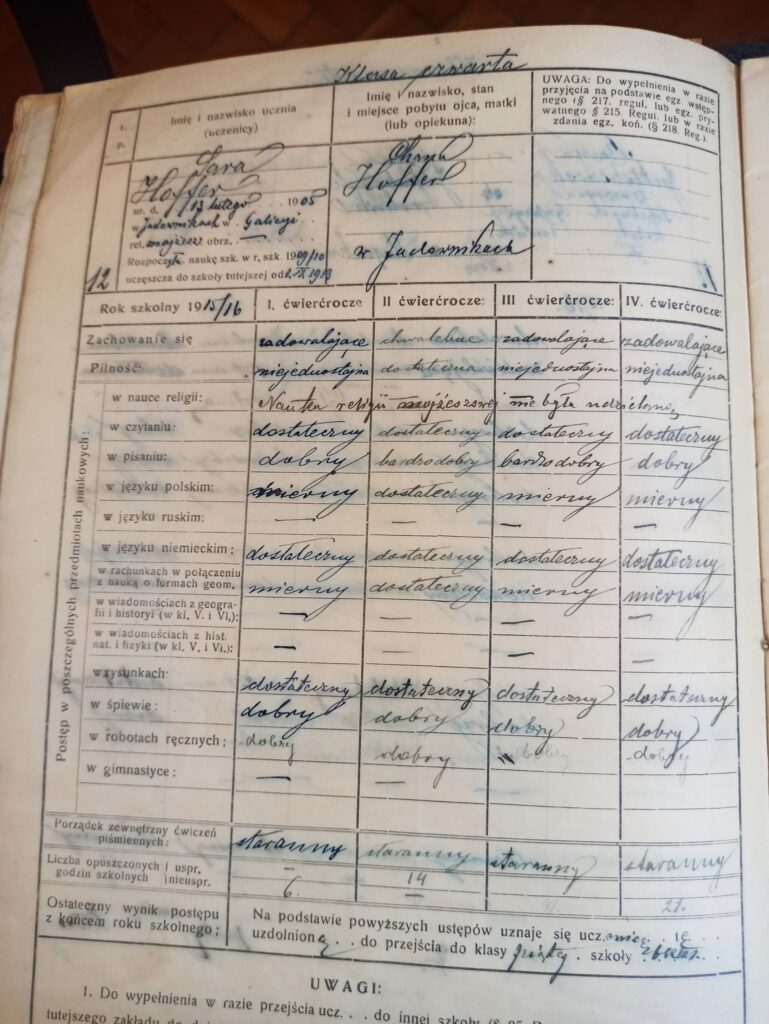
Wolf and Chana’s oldest daughter, Reisel, emigrated to the USA in 1920, thus avoiding the Holocaust. Of the siblings who remained in Poland, only Dwojra started a family: in 1937 she married Juliusz Leon Goldfinger, a furrier from Kraków, and settled with her husband in the family home in Jadowniki, where their son Josef Majer was born on August 17, 1940. All of them – Chana, her four children, her son-in-law and her grandson – were murdered. But before that happened, the family had lived in Jadowniki until mid-July 1942.
This is how Wolf’s half-brother Isidor (Izak) recalled the Munz famly house in 1965: “As I recall, his property consisted of a brick building which included a butcher shop, a grocery – or general store which was apart from the butcher shop, 3 rooms behind the store and a shed in the rear. It was a one-story building. the lot was approximately 60 feet by about 150 feet. this property was on the northeast side of the main highway leading from Jadowniki to Brzesko.”
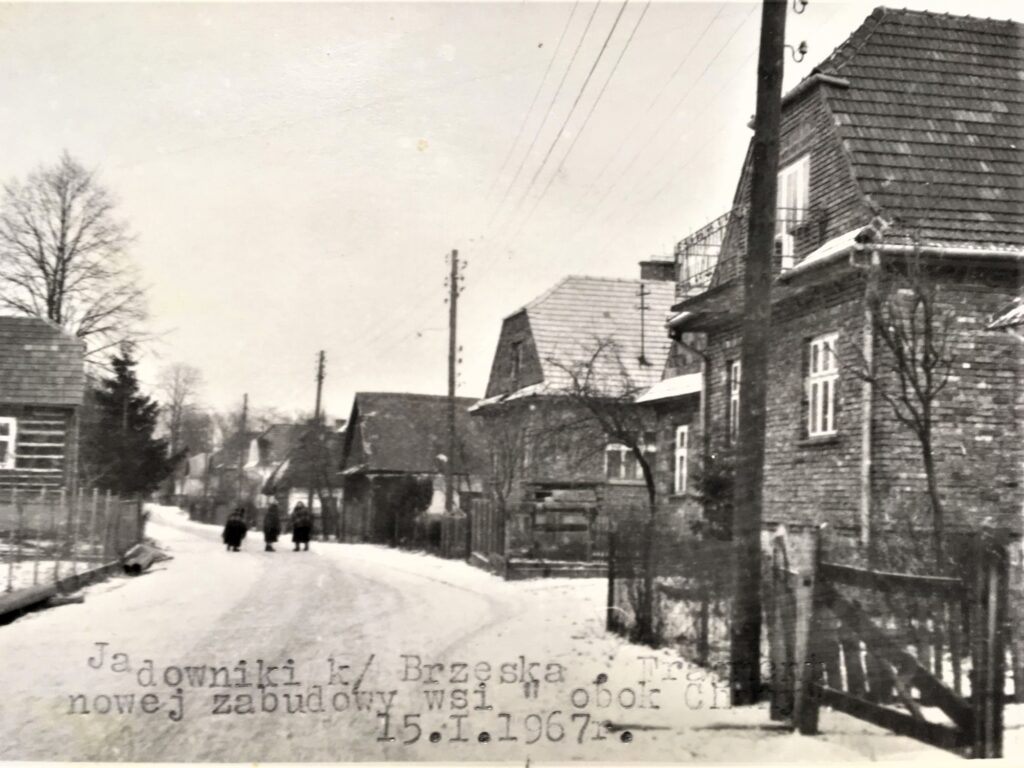
A few years ago, Sabina Jakubowska wrote down several testimonies related to this family: “Before the war, when I was still living with my parents, we had Jewish neighbours. Chana lived in a small wooden house, and her children, Lajbel, Rózia, Surka, Dorka lived with her. One of Chana’s daughters, Dorka I think, had a disabled son named Josiu, and his father was named Idek. It was a very good, decent family, only Rózia made her mother suffer, because she liked very much to sneak out to bonfires together with her Christian friends, where she ate sausage and smoked cigarettes. They all perished during the war ” (from the testimony of Zofia Stec, 1929-2019, written in 2014) “Chana was very nice. She would come to us for milk, take milk from my mother in such cans, put them on her back and trade them at the market in Brzesko. They liked each other very much, my mother and her.
I remember when the Germans were gathering all the Jews to the ghetto in Brzesko, they also took Chana and her family. Chana came to say goodbye to my mother… The Germans transported Jews from Brzesko to Tarnów. There were so many people that there was not enough place on the train, so they were also transported by carts. Chana was in one of them and tried to escape when they reached Zbylitowska Góra. She jumped off the wagon straight into the ditch, and the Germans shot her right there. She’s probably buried there somewhere. I know this from my brother Gustek, who was forced to serve as the cart’s driver and saw this. As soon as he came back, he told us that Chana was dead and we knew immediately what happened to her ” (from the testimony of Maria Małek, born in 1933, recorded in 2021)
In the Kraków State Archive there are kept postcards sent by Dwojra (Dora) Goldfinger née Munz and her husband to Rojza Munz in February-March 1942, when the family still had no idea what awaited them in a few months.
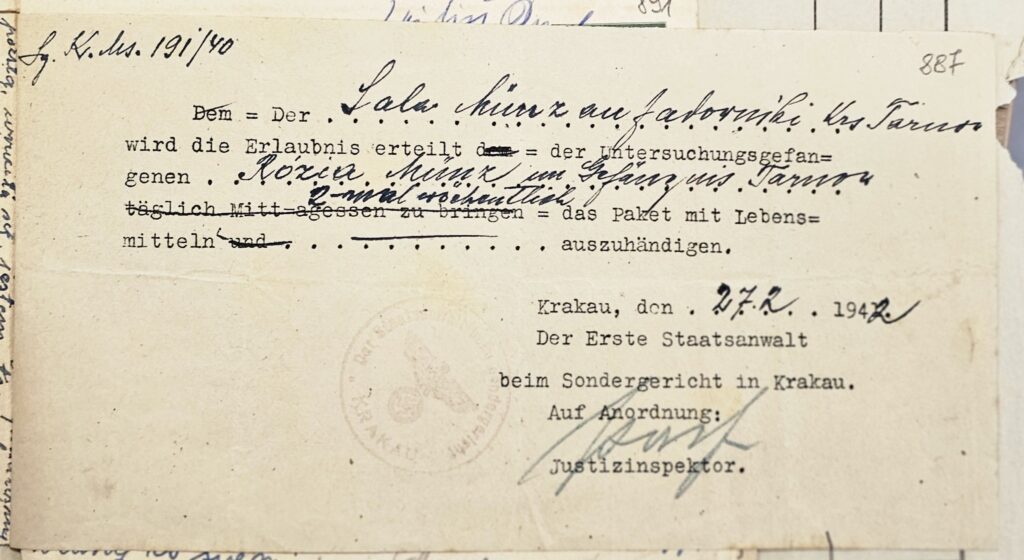
Rojza most likely tried to trade in Krakow, which Jews were forbidden to do. She was caught and sentenced to 9 months in prison. On January 6, 1942, she was sent to prison in Tarnów, where she was to serve the last 3 months of her sentence. Before she was released, she received several letters and packages from her family in Jadowniki. There have survived as many as 8 postcards, all written in Polish, sent by her sister Dora and brother-in-law Idek in February-March 1942.
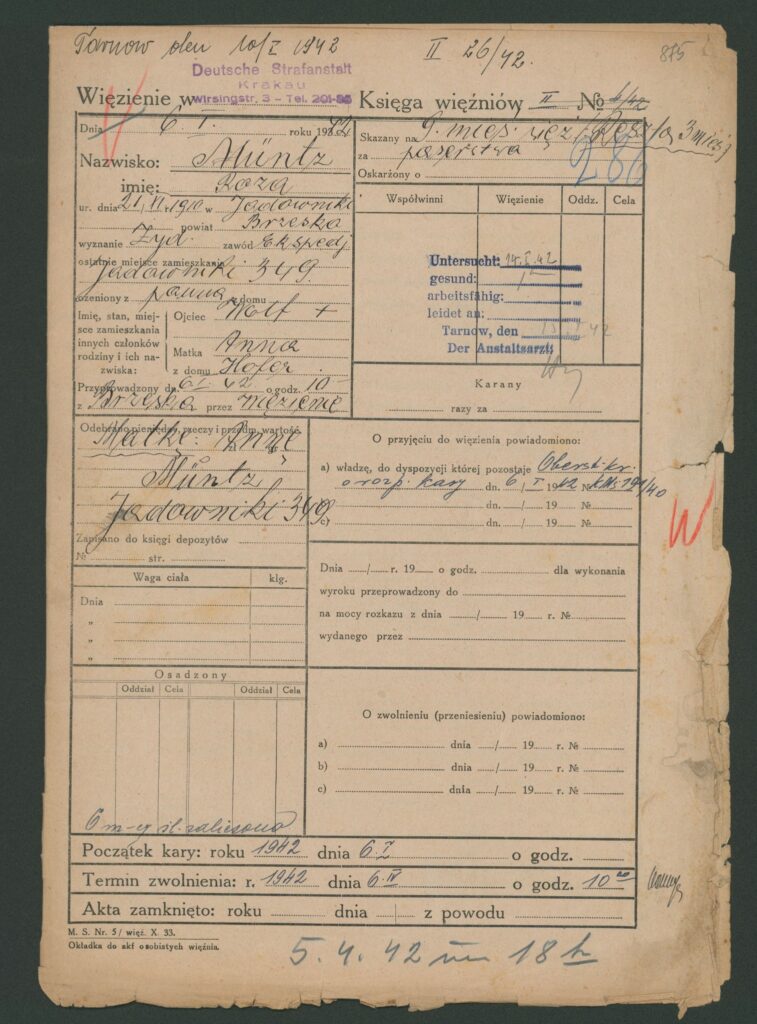
Roza Muntz, from Jadowniki, daughter of Wolf and Anna née Hofer, is to serve her prison sentence in Tarnów from January 6 to April 6, 1942.
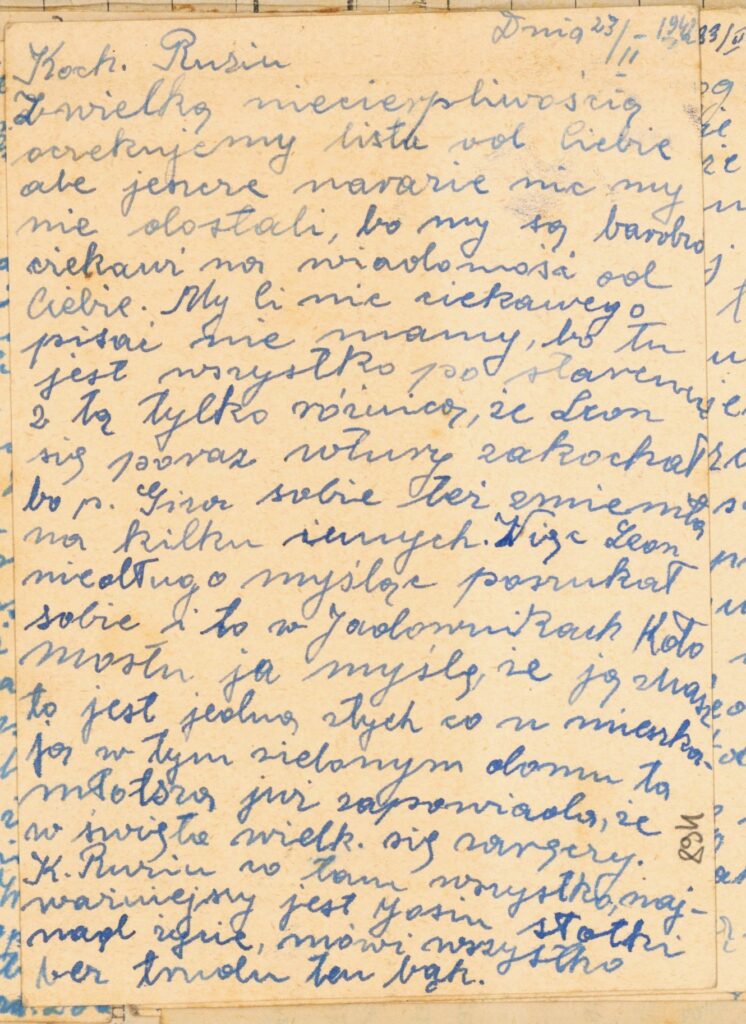
It is very difficult to read these postcards which describe everyday life of the family: brother Leon has fallen in love again, and nephew Josiu is already talking and misses his aunt… In the spring of 1942, the Brzesko ghetto was closed, but Jews living in villages in the Brzesko area were allowed to stay in their homes until mid-July.
“February 23, 1942
Dear Ruziu,
We are waiting with great impatience for a letter from you… Everything is the same here, with the only difference that Leon has fallen in love for the second time, because Ms. Giza has also changed her mind. So Leon, thinking quickly, looked for somebody and has found a girl in Jadowniki near the bridge, I think you know her, she is one of those who live in that green house…
Dear Ruziu, never mind all of that, the most important is Josiu, sweeter than life, he now says everything without difficulty…”
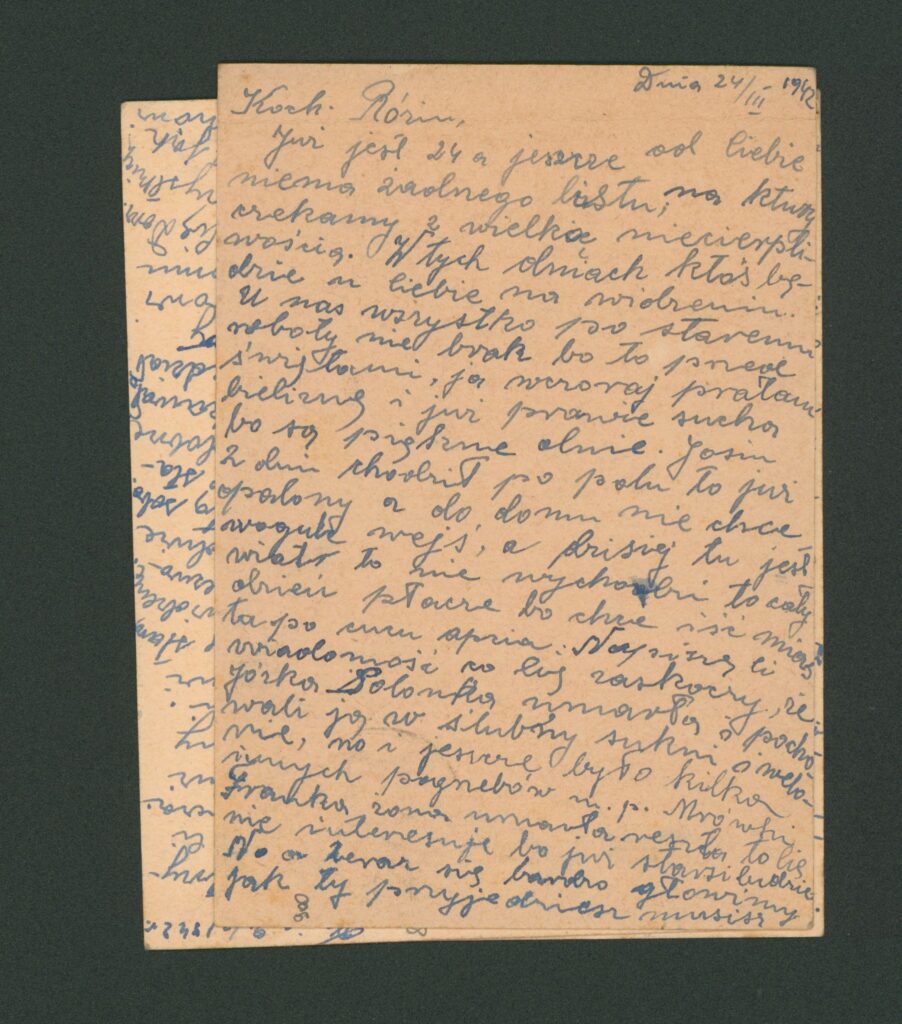
“March 24, 1942
Dear Rózia,
It’s already the 24th and there’s still no letter from you, which we’re waiting for with great impatience. In these days someone will be visiting you. Everything’s the same as before, there’s no shortage of work as in time before the holidays. I washed the laundry yesterday and it’s almost dry because the days are beautiful. Josiu walked around the field for 2 days and is already tanned, and he doesn’t want to go into the house at all, and today there’s wind here so he can’t go out, and he’s been crying all day… I’ll write you a message that will surprise you: Józka Golonka died and they buried her in her wedding dress and veil, and there were a few other funerals, wife of Franek Mrówka died… And now we’re really racking our brains about how you’re going to come. You have to ask for a pass, because you’re not allowed to leave the city without one. In any case, someone will come to pick you up. A few days separate us, and you will have peace. We all send you our regards. Dora, Josiu kisses you.”
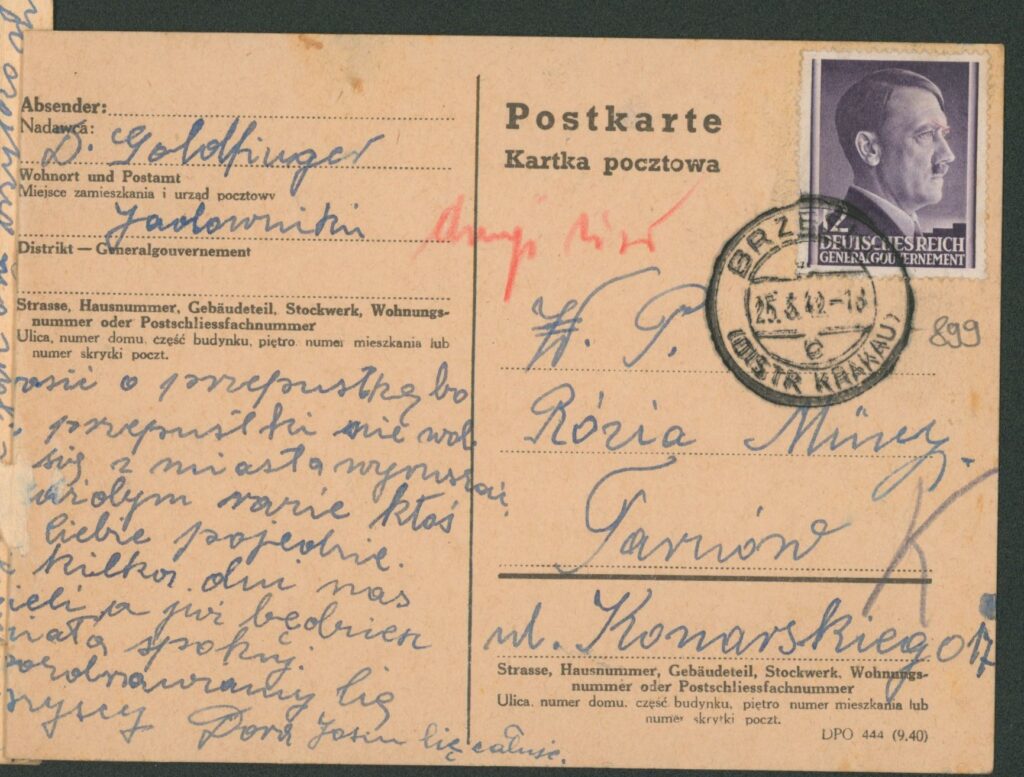
That was the last card. On April 5, 1942, Rojza was released from prison. And on July 15, a regulation was issued according to which within several days all the Jews had to move out of the village to the Brzesko ghetto, “with the final deadline of Saturday,” and “Jews encountered in any community after the above deadline had to expect the death penalty.”
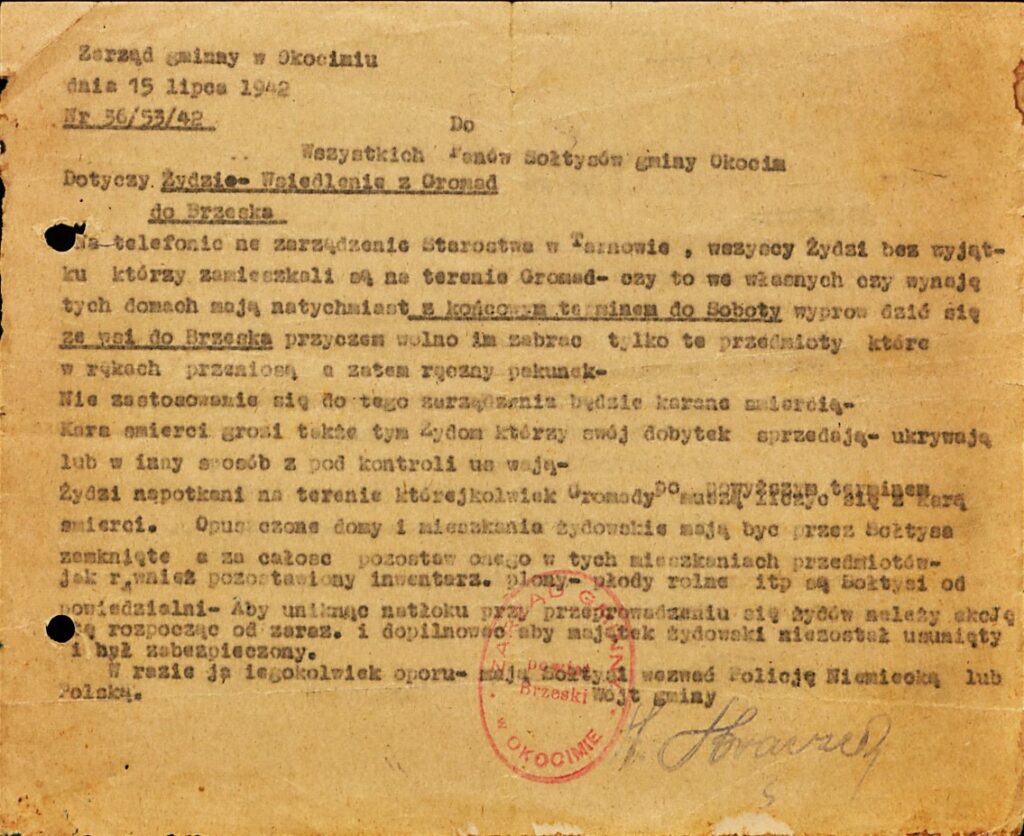
Chana, her children Rojza, Leon, Sara and Dora, her son-in-law Idek and her 2-year-old grandson Józio were murdered. We do not have their photos – only these cards and a handful of memories remain. The only surviving daughter of the Munz family, Reisel, travelled to Europe after the war, hoping to find her siblings. Having learned that no one had survived, she adopted a boy who looked like her murdered brother.
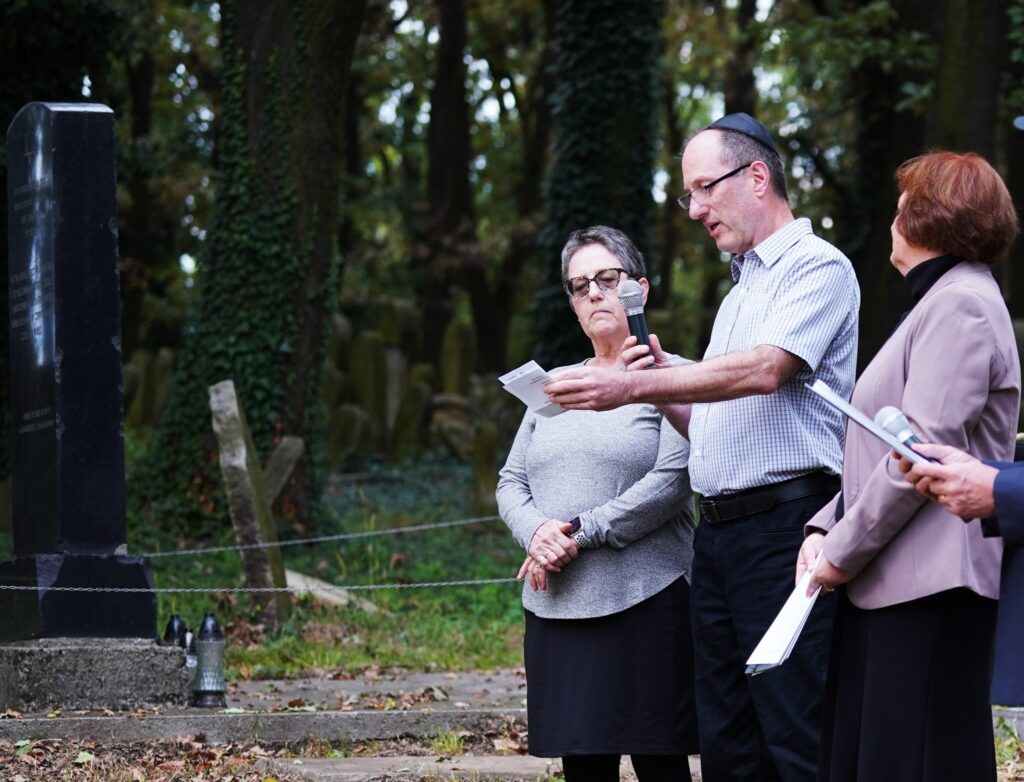
On September 15, 2024, during the Commemoration Ceremony at the Brzesko Jewish cemetery, the living relatives of the Munz family, Rich Mintz and his sister Laurie Mintz, read the names of the murdered.
May the memory of all Holocaust victims be an eternal blessing.
© Anna Brzyska, 2025