
Before World War II, women living in Brzesko and the surrounding areas most frequently used the assistance of midwives during childbirth – they turned to a doctor only when the delivery was expected to be particularly complicated. Starting from 1877, the main midwife attending the births of Jewish women was Estera Eichenholz. Between 1877 and 1900, she assisted in the births of over 2,000 children. She attended her last birth on April 24, 1900, and died a week later at the age of 64.
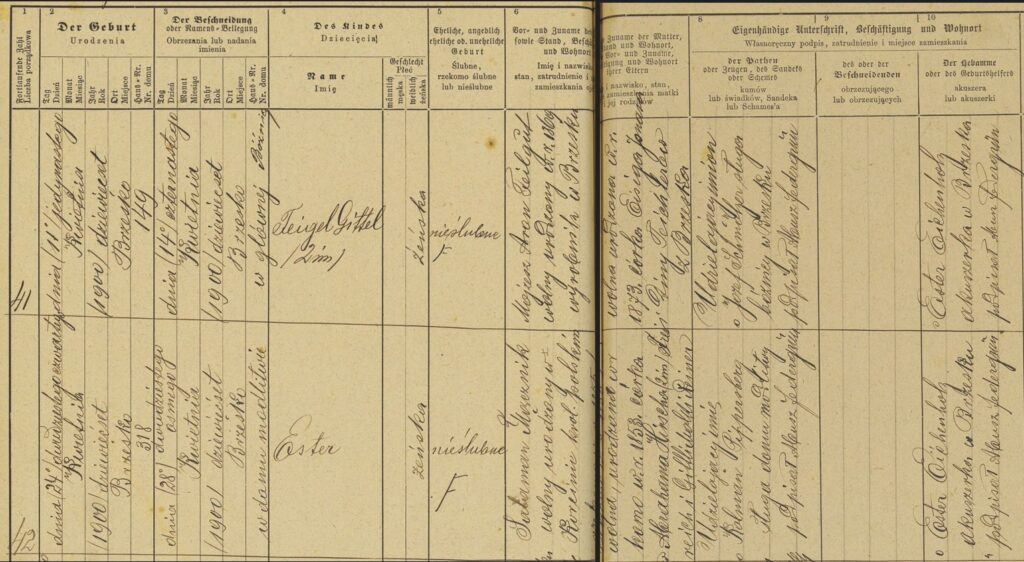
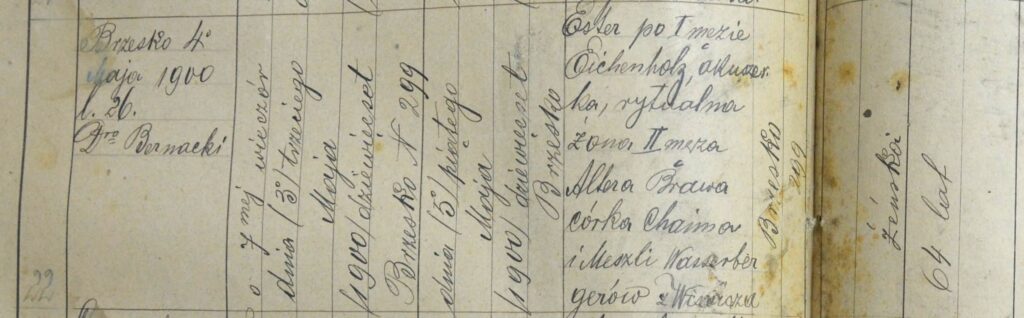
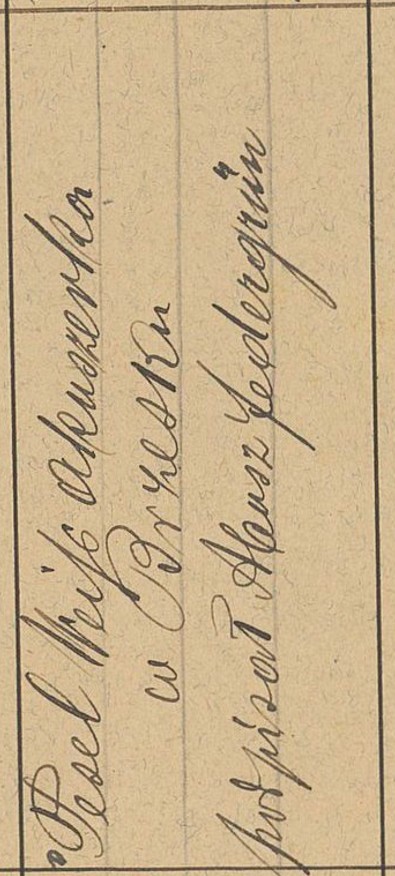
After her death, the majority of births among Jewish women from Brzesko were attended by midwives Pesel (Perla) Weiss and Chana Reiser. I have managed to find almost nothing about the former. I know that the first birth she delivered in Brzesko was registered on July 6, 1897; by the end of that year, she had assisted 10 more women in labor. Until her death in 1912, she attended several hundred births.
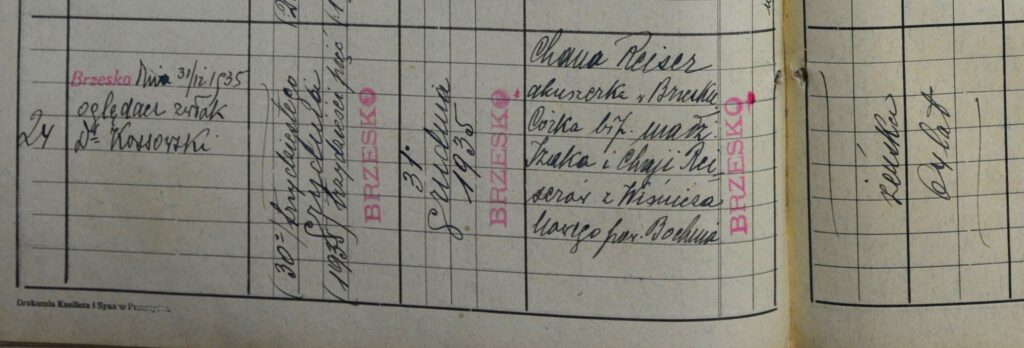
Wiśnicz-born Chana Reiser (1871–1935) was the daughter of Izak and Chaja Reiser. Most likely, she moved to Brzesko after marrying Abraham Josef Buchstahl, a tinsmith. Since the spouses had only a religious wedding, Chana was recorded under her maiden name in official documents. The couple had two daughters, Pessel (1905) and Chaja (1910); the girls attended the publich primary school in Brzesko. Chana Reiser worked as a midwife in Brzesko from 1900 to 1934; she died of heart attack on December 30, 1935.
Midwives supported women in labor even when they could not count on payment for their work. In the minutes of the Brzesko City Council, one can find requests from midwives for an “annual remuneration for providing free assistance to poor women in labor”; however, the city did not always find the funds for such support.
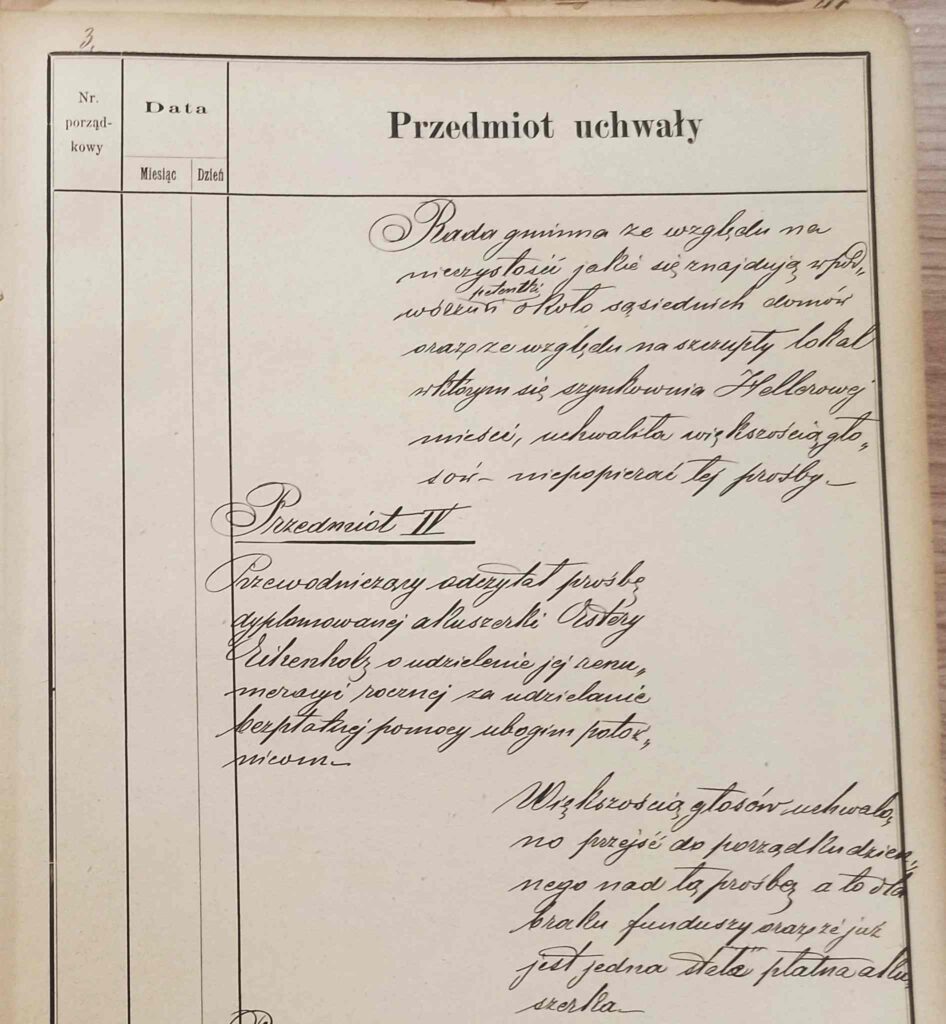
“The Chairman read the request of the certified midwife Estera Eichenholz for granting her an annual remuneration for providing free assistance to poor women in labor.
By a majority vote, it was resolved to move to the next item on the agenda regarding this request, due to the lack of funds and because there is already one permanent paid midwife.”
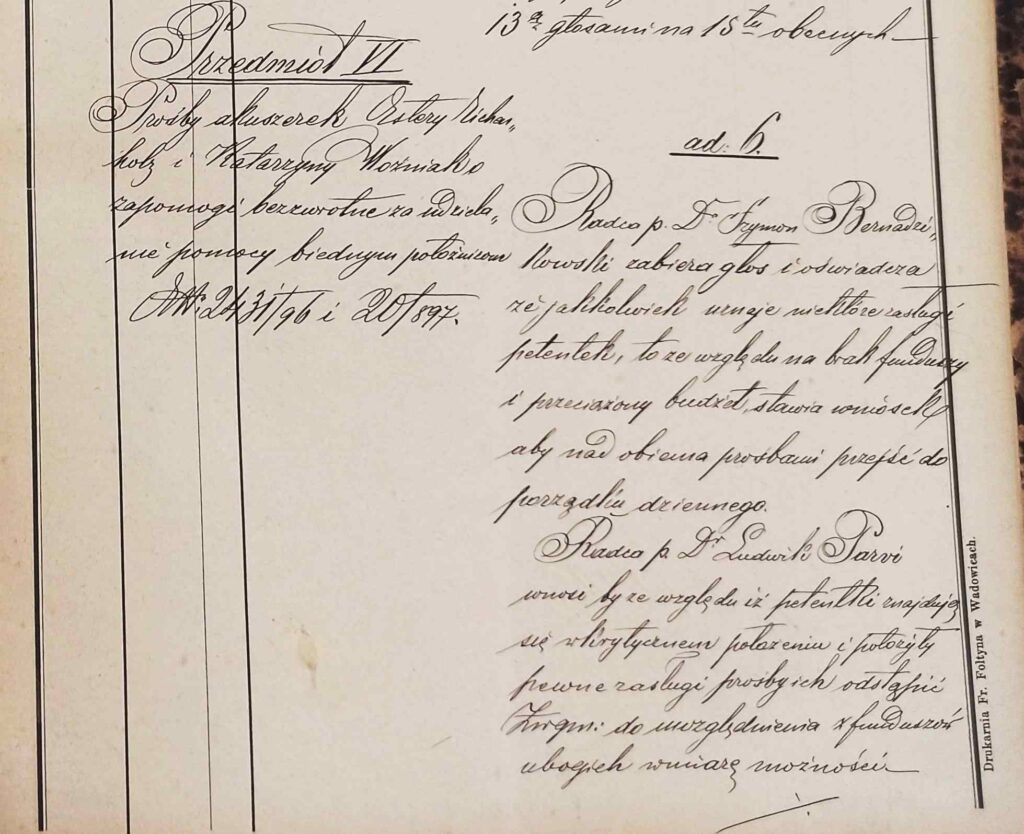
“Requests from midwives Estera Eichenholz and Katarzyna Woźniak for non-repayable grants for providing assistance to poor women in labor.
Councilor Dr. Szymon Bernadzikowski takes the floor and states that despite certain merits of the petitioners, due to the lack of funds and an overburdened budget, he puts forward a motion to move to the next item on the agenda regarding both requests.
Councilor Mr. Dr. Ludwik Parvi states that, given the petitioners find themselves in a critical situation and have rendered certain merits, their requests be forwarded for consideration to be covered by poor relief funds as far as possible.”
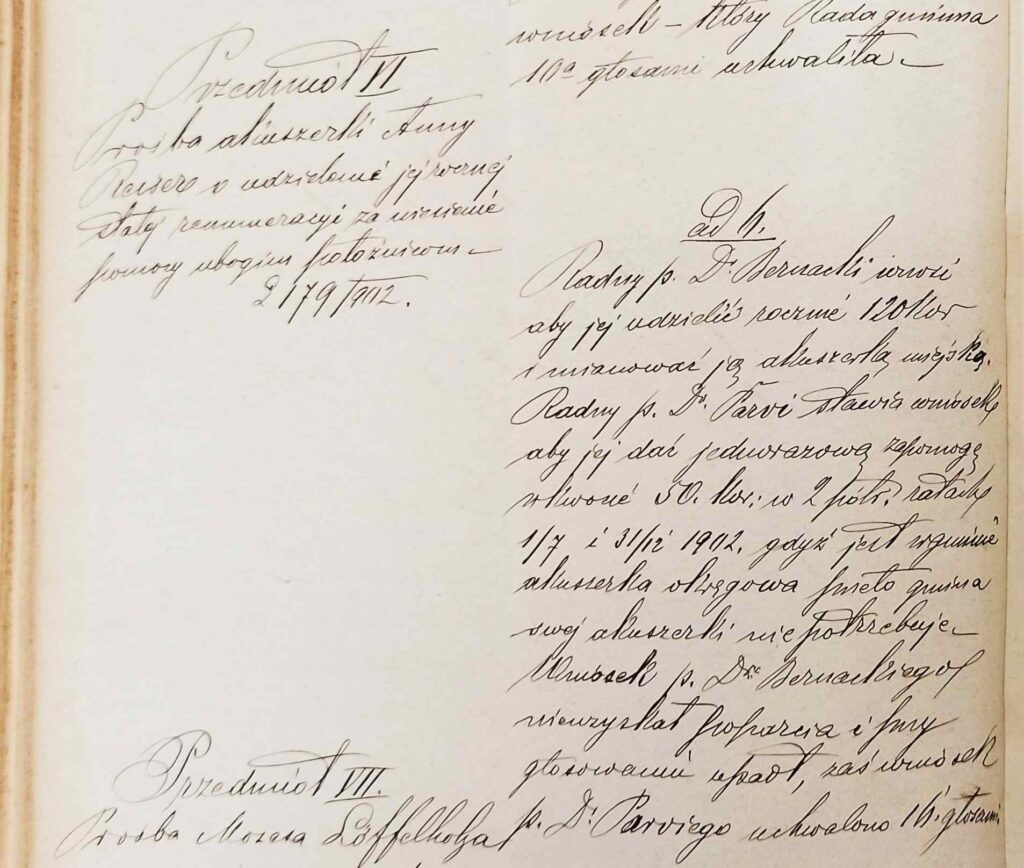
“Request from midwife Anna Reiser for granting her a permanent annual remuneration for providing assistance to poor women in labor.
Councilor Mr. Dr. Bernacki suggests to grant her 120 Koronas annually and to appoint her as a municipal midwife. Councilor Mr. Dr. Parvi puts forward a motion to grant her a one-time relief payment in the amount of 50 Koronas, payable in installments in the second half of the year on July 1 and December 31, 1902, since there is already a district midwife in the commune, and therefore the commune does not need its own midwife. Mr. Dr. Bernacki’s motion received no support and was defeated in the vote, while Mr. Dr. Parvi’s motion was passed with 16 votes.”
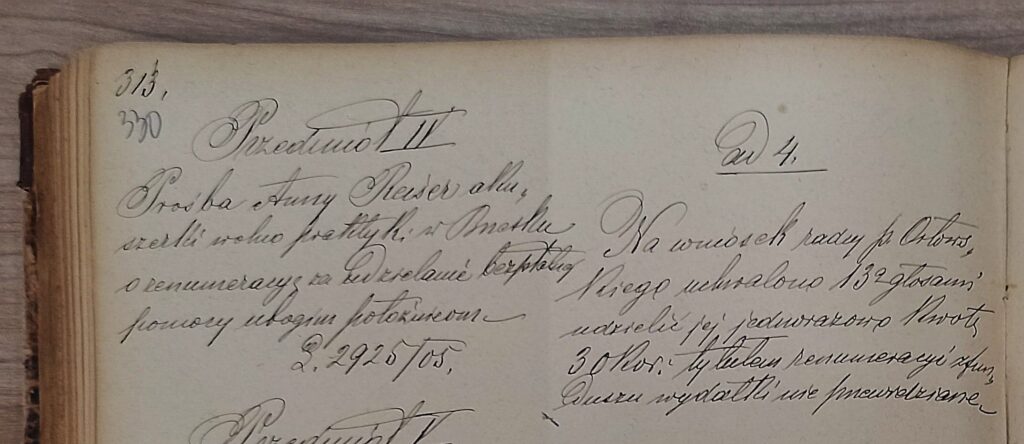
“Request from Anna Reiser, a freely practicing midwife
in Brzesko, for remuneration for providing free assistance to poor women in
labor.
Upon the motion of Councilor Mr. Orłowski, it was resolved by 13 votes to grant
her a one-time sum of 30 Koronas as remuneration from the unforeseen expenses
fund.”
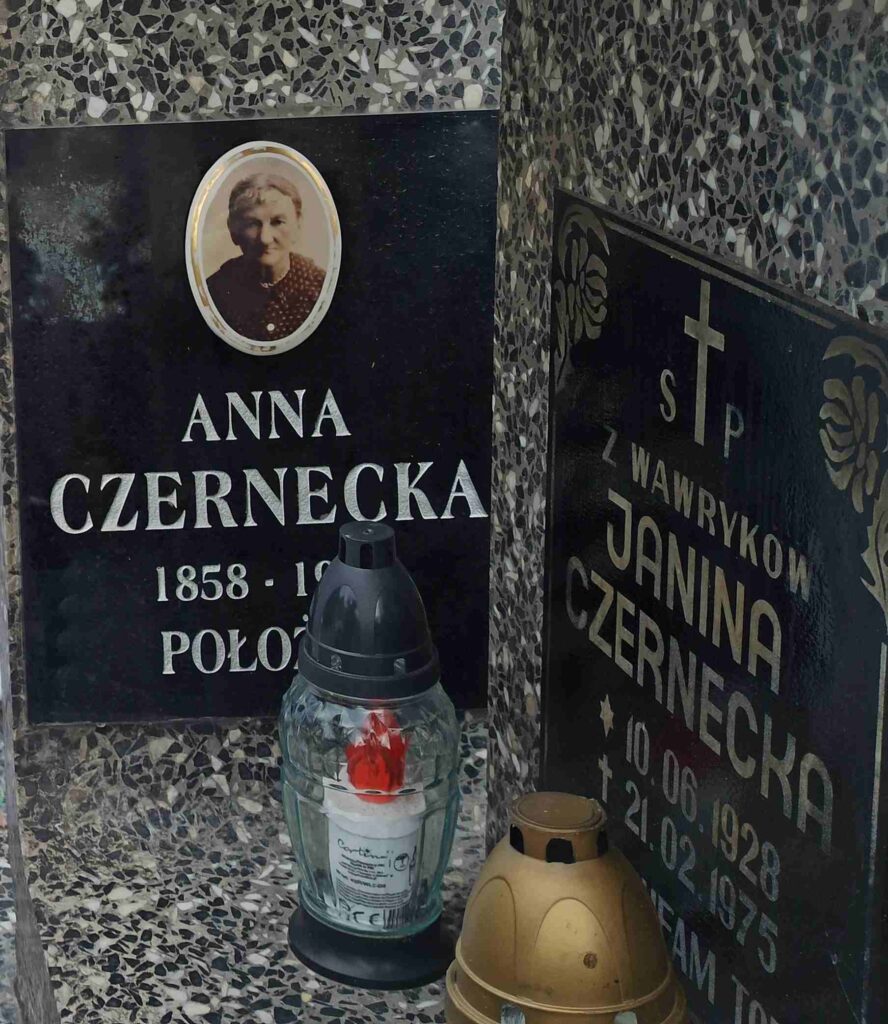
Although the majority of Jewish women from Brzesko turned to Jewish midwives, births were also sometimes attended by Catholic midwives—Katarzyna Smolińska, Katarzyna Woźniak, and several others. This was particularly frequent in villages. Here, I would like to say a few words about Anna Czernecka, a midwife from Jadowniki. I managed to find data on 24 births of Jewish women residing in Jadowniki that this midwife attended between 1899 and 1918. Notably, some women—such as Gitel Kornhauser, Laja Biernbaum, and Chana Minz – relied on Anna Czernecka’s assistance for multiple births. It was Mrs. Czernecka who assisted in the births of six children of Chana Minz, née Hoffer.
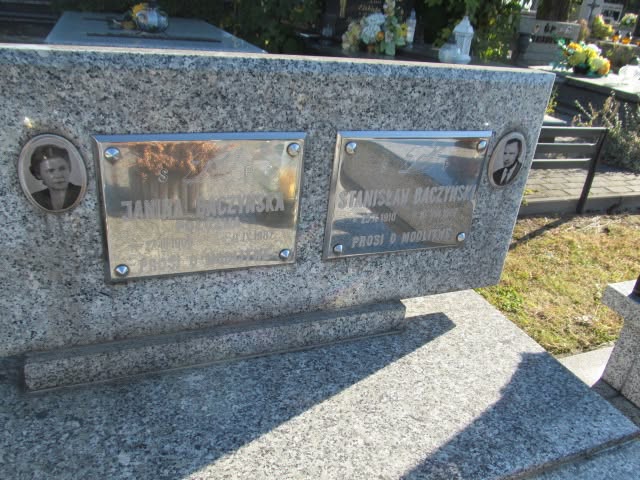
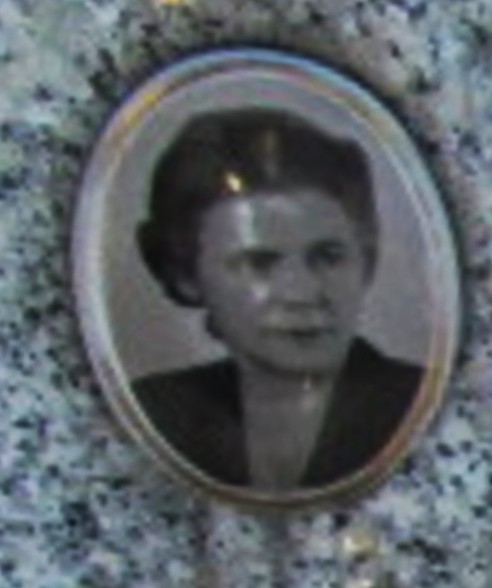
Following the death of the last Jewish midwife, Chana Reiser (1871–1935), the majority of births among Jewish women in Brzesko were attended by a Catholic midwife, Janina Baczyńska (March 27, 1908 – September 9, 1987), who obtained her midwifery diploma in 1935.
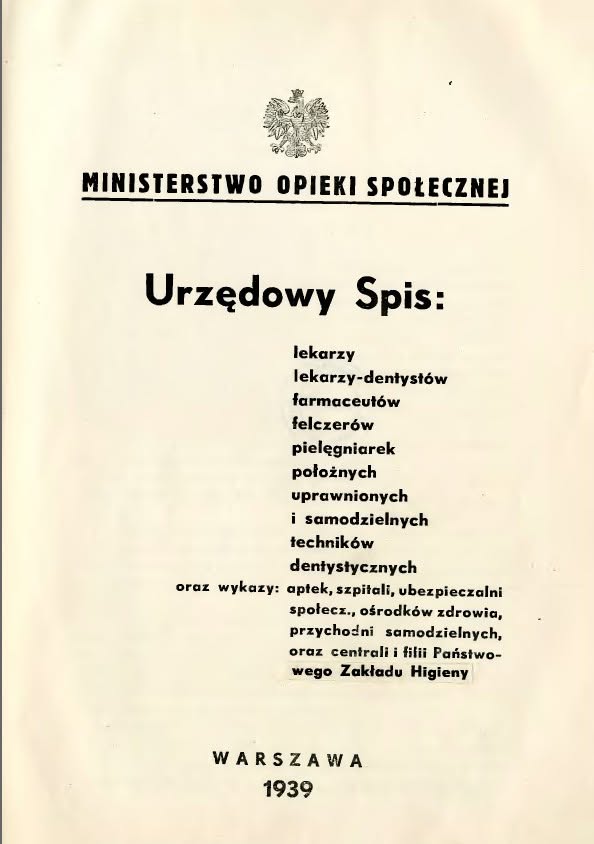
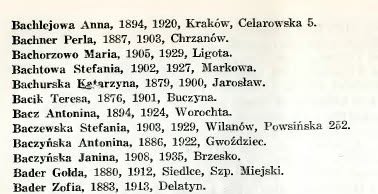
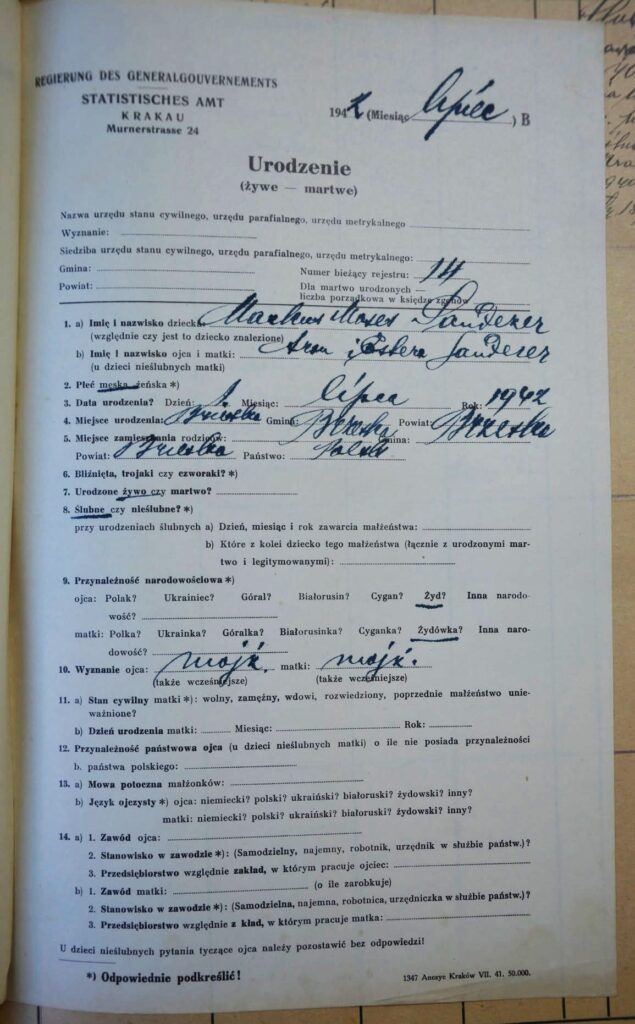
It was she who attended the last registered Jewish birth in Brzesko on July 1, 1942. On that day, a son, Markus Moses, was born to the spouses Aron Sandecer and Estera née Neuman. The boy was named after his grandfather, Markus (Mordechaj) Sandecer. As prescribed by Jewish law, the boy was circumcised on the eighth day. Menasche Kaufman served as the mohel (circumciser), and Elias Sandecer and Chaim Teitelbaum were the witnesses. All of them were murdered less than three months later at the Bełżec death camp.
Janina Baczyńska remained a midwife until the end of her life and is buried at the municipal cemetery in Brzesko. The inscription on her tombstone reads: “Janina Baczyńska. Midwife. Asks for a prayer.”
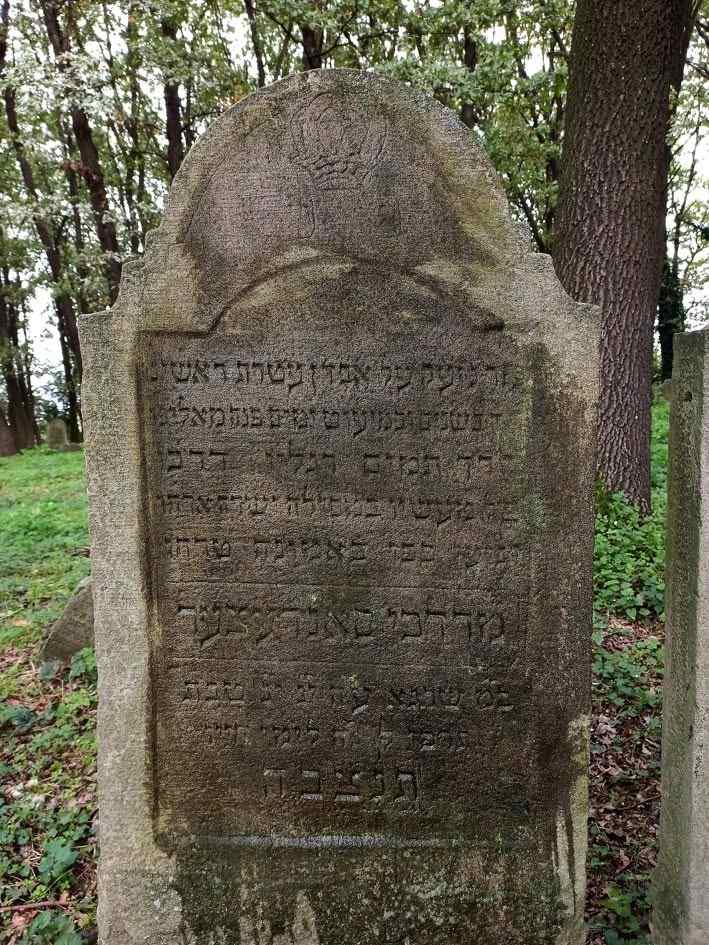
As for the Sandecer family, all that remains are a few entries in the vital records and the tombstone of the grandfather of the little boy, who lived for less than 13 weeks.
© Anna Brzyska, 2026